

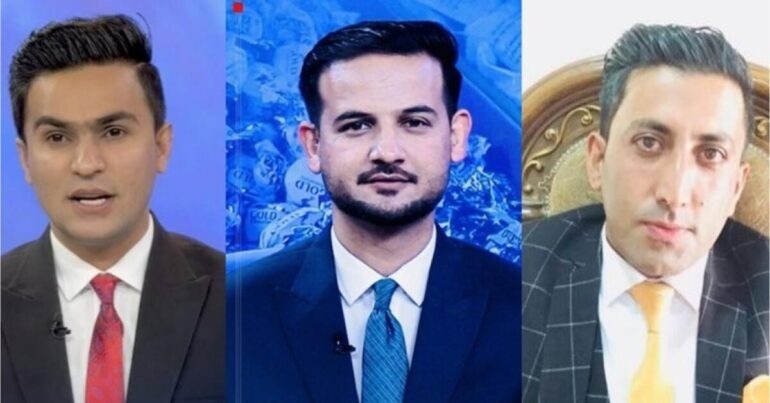

KABUL, AFGHANISTAN – Richard Lindsay, the United Kingdom’s Special Representative for Afghanistan, has expressed concern over the Taliban’s detention of three journalists in Kabul and called for transparency and justice in their cases.
In a message posted on X on Friday (May 15), Lindsay said journalists must be able to continue their work without fear.
He said: “Concerned by reports that 3 journalists have been detained in Afghanistan without clear charges, as well as reports of assaults and property seizures.”
The British representative called for “transparency and justice” in the journalists’ cases and said their rights must be respected.
About a week ago, the Taliban detained Javid Niazi, head of the Peygard news agency, as well as Mansoor Niazi and Imran Danish, two journalists from TOLOnews.
The Taliban’s Ministry of Information and Culture has confirmed the detention of the TOLOnews journalists but has not provided any explanation regarding the charges against them or the reasons for their arrest.
TOLOnews confirmed on Sunday that the Taliban had detained Mansour Niazi and Imran Danish, two of its journalists.
The media outlet also did not specify the reason for their detention.
Afghanistan Journalist Center said the arrests were carried out by members of the Taliban’s General Directorate of Intelligence (GDI), which has been accused by press freedom groups of targeting journalists over their reporting and media activity.
The watchdog earlier condemned the arrests, calling them an attack on press freedom and demanding the immediate and unconditional release of the detained journalists. According to AFJC figures, at least seven journalists are currently detained or serving prison sentences in Afghanistan, highlighting what it described as an expanding crackdown on independent media.
The detentions have triggered sharp criticism from international rights groups and press freedom organizations, which say the arrests reflect increasing pressure on Afghanistan’s media sector.
Amnesty International earlier this week described the cases as “arbitrary detention and enforced disappearance,” urging the Taliban to immediately clarify the journalists’ fate and whereabouts and allow them to contact their families and legal representation.
Amnesty said the incidents form part of a continuing pattern of intimidation and reprisals against journalists and media workers in Afghanistan, which it said violates Afghanistan’s obligations under international human rights law.
The rights group called for the journalists’ immediate release unless they are formally charged with internationally recognizable criminal offences and afforded fair trials.
Furthermore, the United Nations Assistance Mission in Afghanistan (UNAMA) also expressed serious concern over the detention of at least three journalists by Taliban authorities.
In a statement, the mission said it was alarmed by reports of assaults against journalists and the confiscation of their property during search operations conducted by Taliban forces. UNAMA urged the Taliban to clarify the legal basis for the arrests, disclose the charges against the journalists, and ensure that due process is followed in line with international human rights standards.
The media environment in Afghanistan has deteriorated significantly since the Taliban’s return to power in 2021. Journalists report facing arrests, censorship, interrogations, and pressure linked to their reporting, online activity, or alleged associations with exiled Afghan media outlets.
The AFJC has documented at least 150 violations of press freedom and incidents of violence against journalists since May 2025, including 127 threats and 20 arrests. Reporters Without Borders ranked Afghanistan 175th out of 180 countries in its 2026 World Press Freedom Index, placing it among the worst countries globally for media freedom.
Reporters Without Borders ranked Afghanistan 175th out of 180 countries in its 2026 World Press Freedom Index, placing it among the lowest-ranked countries globally for media freedom.
These arrests have raised fresh concerns among press freedom advocates, who say the continued detention of journalists reflects the growing restrictions on independent media and freedom of expression in Afghanistan under Taliban rule.

