

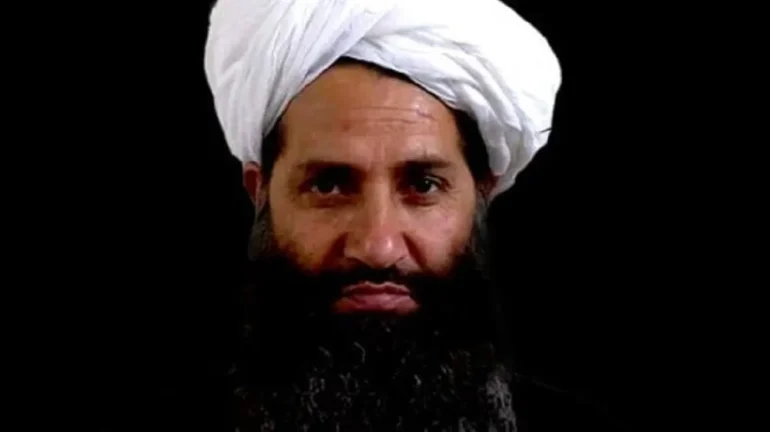

KABUL, AFGHANISTAN – Hibatullah Akhundzada, the leader of the Taliban, has asked members of the Council of Ulema (religious scholars) of Parwan and Kapisa provinces to write “books and treatises” about the Taliban fighters who were killed, so that it may contribute to the “history of the jihad era” and show “loyalty” to the deceased.
Hamdullah Fitrat, the deputy spokesperson of the Taliban, said in a statement that the meeting was held today (Sunday, May 17) with the participation of local Taliban officials in Parwan and Kapisa, Amir Khan Muttaqi, the group’s Minister of Foreign Affairs, and a number of other religious scholars.
The Taliban leader also said during the meeting that “special attention” should be given to recording the history and places of death of the group’s fighters so that future generations may become familiar with “the history of the sacrifices of the mujahideen (Taliban).”
He also stated that plaques should be installed on the graves of the group’s fighters so that “their memory and history may remain eternal.”
The Taliban describe their 20-year war in Afghanistan as “jihad” and refer to their killed fighters as “martyrs,” and they are working to preserve and promote their own narrative of the conflict through books, documentation, and cultural institutions.
In this regard, the group has also built several “jihad museums,” where items related to the war are displayed, including suicide vests—explosive devices worn by attackers and detonated to cause maximum casualties—and so-called “yellow barrels,” which are described as containers that were allegedly used to conceal and deploy roadside improvised explosive devices (IEDs) used in attacks on military vehicles and civilian targets.
In addition, earlier reporting from eight months ago provides further context to the Taliban’s approach to documenting their conflict narrative. The Taliban had inaugurated a “Jihad Museum” in northern Jawzjan province, where various items related to the war were displayed, including barrel bombs, explosive vests, rockets, hand grenades, and other improvised explosive devices.
According to Taliban officials, the museum was intended to preserve what they describe as “historical and wartime heritage” and to educate future generations about the country’s past conflicts. However, rights groups and local residents criticized the move, arguing that displaying weapons associated with suicide attacks and civilian harm risks glorifying violence and normalizing tools that caused widespread suffering during the long war in Afghanistan.
Furthermore, similar exhibitions have been reported in other northern cities such as Mazar-e-Sharif, where military equipment and explosive devices have been shown alongside cultural artifacts, further intensifying public concerns about the framing of recent history.
However, during the two decades of conflict, Taliban forces have been responsible for the deaths of thousands of Afghan civilians, including women and children, and their leaders have also been accused of committing “crimes against humanity.”
During the two-decade conflict and the more intense fighting around the 2021 withdrawal of foreign forces, Taliban tactics, including roadside bombs, suicide attacks and indiscriminate strikes, caused large numbers of military and civilian casualties. UN reporting documented sharp rises in civilian deaths and injuries in periods of intensified fighting, underscoring the human cost of the insurgency’s tactics.
Rights groups warn that memorializing the tools of that violence risks whitewashing or celebrating actions that devastated communities.
The Taliban’s leadership enforces a rigid and fundamentalist interpretation of Islam and has repeatedly used public ceremonies, parades, monuments and educational messages to promote its ideological narrative.
Human-rights organisations and residents quoted in local reporting say the presence of explosives in public displays can provoke fear and trauma, particularly for civilians who lost family members to bombings.
This initiative reflects the Taliban’s broader effort to shape historical memory and public narrative by formally documenting their fighters as “martyrs” and institutionalizing their version of the conflict.
Such efforts are often seen as part of a wider strategy to legitimize their rule domestically while reinforcing ideological narratives through education, religious institutions, and cultural preservation projects.

