

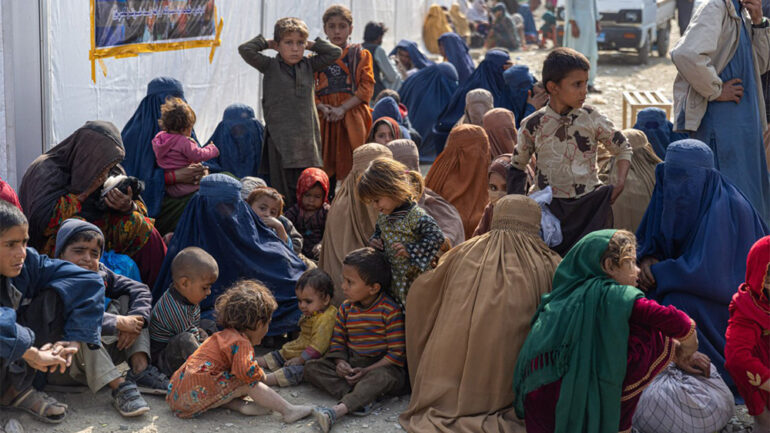

KABUL, AFGHANISTAN – Afghanistan continues to face worsening humanitarian challenges as cross-border hostilities with Pakistan, devastating floods, climate-related shocks, and severe funding shortages deepen the crisis across the country, according to OCHA Afghanistan’s March and April 2026 Humanitarian Update published in May 24, 2026.
The report highlights that ongoing cross-border hostilities between Afghanistan and Pakistan, which intensified after October 2025, have caused significant civilian casualties, mass displacement, and damage to essential infrastructure.
According to the United Nations Assistance Mission in Afghanistan (UNAMA), armed violence between Afghanistan’s de facto security forces and the Pakistani military between January and March 2026 resulted in 769 civilian casualties, including 372 deaths and 397 injuries.
The report notes that airstrikes following Pakistan’s announcement of “Operation Ghazab lil-Haq” on February 26 accounted for nearly 64 percent of casualties. More than 100,000 people were displaced across Khost, Kunar, Nangarhar, Nuristan, Paktia, and Paktika provinces, while nearly 1,000 homes were damaged or destroyed.
Civilian infrastructure also suffered extensive destruction. At least 19 health facilities were suspended or partially closed, affecting healthcare access for approximately 78,000 people. In addition, education was disrupted for more than 13,000 students in Kunar and Nangarhar provinces.
Humanitarian access was further restricted due to insecurity and road closures, particularly in Nuristan province, where nearly 100,000 people were cut off from essential assistance for almost two months. Aid delivery resumed only after local mediation efforts reopened key supply routes in mid-April.
At the same time, Afghanistan is grappling with severe climate-related disasters. Between late March and April, heavy rainfall triggered widespread flash flooding across 31 of the country’s 34 provinces, affecting more than 31,000 people and killing at least 55.
The floods damaged over 7,700 houses and completely destroyed 1,731 homes, leaving thousands of families displaced. Rural communities in Nangarhar, southern, and western provinces were among the hardest hit, with severe destruction to agricultural land, irrigation systems, and already fragile local economies.
Humanitarian agencies have provided emergency assistance to nearly 38,000 people, including food aid, shelter support, water and sanitation services, and cash assistance. However, OCHA warns that damaged infrastructure, difficult access conditions, and funding shortages continue to hinder response efforts.
The report also draws attention to Afghanistan’s worsening climate vulnerability. The country is now facing its sixth consecutive year of drought-like conditions, with below-normal rainfall and rising temperatures expected to continue into 2026. These overlapping crises are compounding food insecurity and economic hardship, particularly in rural communities dependent on agriculture.
In Kabul province, OCHA highlighted the fragile state of basic healthcare services. A small clinic in Paghman district supported by humanitarian funding remains the only accessible health facility for many remote communities.
The clinic serves women and children and provides nutrition treatment, immunization, and mental health support. However, without sustained donor funding, the closure of the clinic could leave approximately 12,000 people without access to essential healthcare.
Meanwhile, families affected by the August 2025 earthquake in Kunar province continue to struggle with recovery months after the disaster. Many remain in temporary shelters without stable livelihoods, permanent housing, or sufficient long-term support.
The report emphasizes that while emergency aid has saved lives, long-term recovery remains severely underfunded.
OCHA warned that Afghanistan’s humanitarian crisis is becoming increasingly complex as conflict, climate disasters, displacement, economic fragility, and funding shortfalls overlap. The agency stressed that sustained international support, improved humanitarian access, and coordinated regional stability efforts will be critical to preventing further deterioration and ensuring life-saving assistance reaches millions of vulnerable Afghans.

