

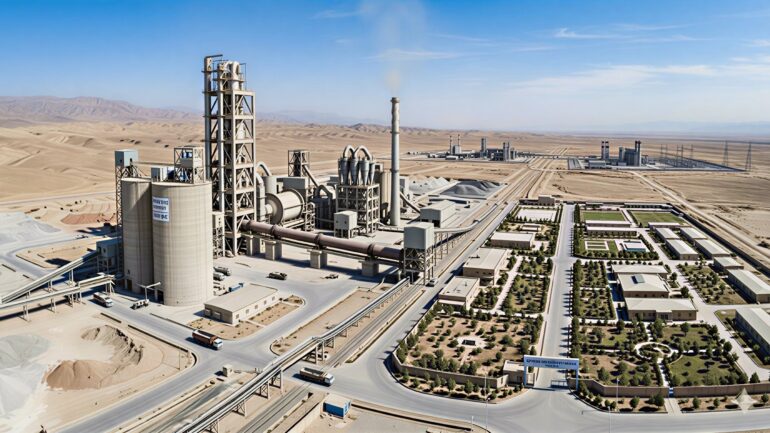

KABUL, AFGHANISTAN – The Taliban authorities on Monday inaugurated construction of a $160 million cement plant in Afghanistan’s northern Jowzjan province, saying the project will help increase local production and reduce dependence on imports.
In a statement posted on X, the Office of the Taliban Deputy Prime Minister for Economic Affairs said the Yatim Taq Cement Production Factory, located in the Yatim Taq area of Jowzjan, will be built by the Turkish company “77”.
Construction work formally began on Monday during a ceremony attended by Taliban Deputy Prime Minister for Economic Affairs Abdul Ghani Baradar and other officials, the statement said. The project is expected to be completed within two years.
Once operational, the factory will have a production capacity of 3,000 tons of cement per day and is expected to create around 5,000 direct and indirect jobs, according to the statement.
At the inauguration, Baradar said the project would strengthen domestic industry, support local production, reduce reliance on imports, and contribute to the country’s economic growth.
He urged the international community to strengthen engagement with Afghanistan under the group’s rule within the framework of the formal economy, reconsider sanctions, and end the country’s political isolation.
“Narrowing the global and regional political and economic space, implementing policies of exclusion at the international level, and prolonging sanctions cannot in any way resolve the challenges of global politics and the global economy,” Baradar said. “On the contrary, such policies generate threats and reduce opportunities for regional and international cooperation.”
Afghanistan’s cement sector has struggled for years, with major facilities in Ghori in Baghlan province, Jabal al-Saraj in Parwan, and plants in Herat operating below capacity due to outdated equipment, electricity shortages, and limited investment.
As a result, domestic production meets only a small portion of national demand, estimated by officials at several million tons annually. The country continues to rely heavily on imports from Iran, Pakistan, and Central Asian countries, including Uzbekistan, Tajikistan, and Kazakhstan.
The project is among the largest industrial investments in northern Afghanistan, a region bordering Turkmenistan that officials say has significant raw material potential for cement production.

