

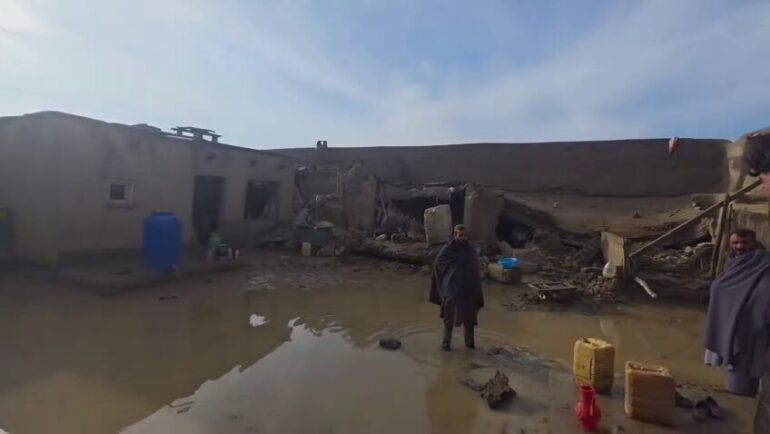

KABUL, AFGHANISTAN – The death toll from days of heavy rainfall and flooding across Afghanistan has risen to 51, with 89 people injured, according to the Taliban-run disaster management authority.
Mohammad Yousuf Hamad, spokesperson for the authority, said in a video message that three people died in the past 24 hours and 16 others were injured, pushing up the overall toll from the recent wave of floods.
A day earlier, authorities had said 48 people were killed, and 73 were injured.
The latest wave of flooding has destroyed 667 residential houses and partially damaged another 2,056 across affected areas, Hamad said. It has also wrecked 244 kilometres of roads and 3,048 hectares of agricultural land, while displacing 201 families.
The flooding impacted at least 18 provinces, including Kabul, Panjshir, Paktika, Khost, Logar, Maidan Wardak, Ghazni, Kandahar, Zabul, Uruzgan, Herat, Farah, Badghis, Jawzjan, Baghlan, Badakhshan, Nangarhar, and Laghman.
Separate weather-related incidents were also reported over the past 24 hours. Local officials in Laghman said an 11-year-old girl died in a landslide in Alingar district on Thursday. In Nangarhar, two people were killed when the roof of a poultry farm collapsed in Haska Mena district on Friday, according to local sources. In Zabul, a lightning strike killed one woman and injured four others, Taliban authorities said.
Afghanistan is particularly vulnerable to seasonal flooding, particularly in spring, when intense rainfall combines with snowmelt to overwhelm the country’s fragile infrastructure and flood-prone valleys. Decades of conflict have left roads, bridges, and irrigation systems in poor condition, exacerbating the impact on rural communities that rely heavily on agriculture.
The latest wave of flooding comes as the country faces a worsening humanitarian situation. According to United Nations estimates, nearly 22 million people require humanitarian assistance, while more than 17 million are experiencing acute food insecurity, most of them women and children.

