

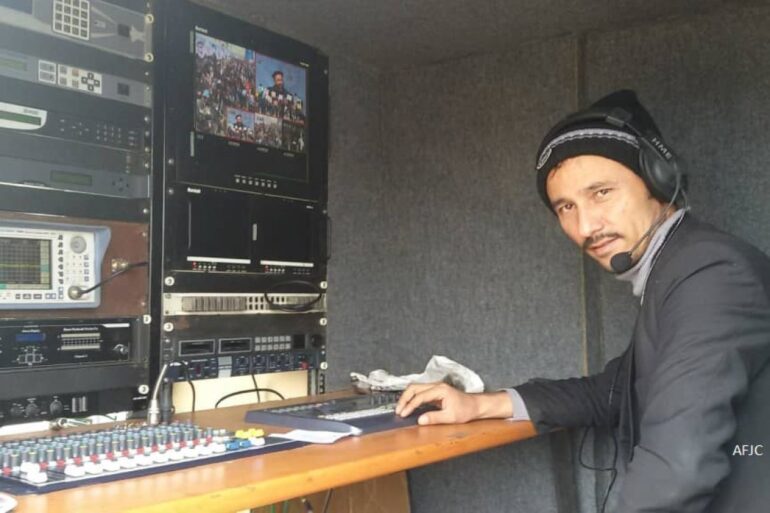

KABUL, AFGHANISTAN – The Afghanistan Journalists Center (AFJC) condemned the Taliban’s suspension of Rah-e-Farda Radio and Television, a private station in Kabul, and the seizure of its equipment, calling on the authorities to reopen the outlet and return its assets.
The Taliban intelligence agents halted Rah-e-Farda’s operations in Kabul and seized its equipment on Saturday, following remarks by the station’s exiled owner, politician Mohammad Mohaqiq, about the ongoing Taliban-Pakistan conflict, local sources and the AFJC said.
The Taliban accused Mohaqiq of inciting the enemy and threatening national unity, according to AFJC. A Taliban Ministry of Information and Culture spokesperson stated the outlet was closed because Mohaqiq allegedly supported Pakistan and condemned the Taliban’s retaliatory actions.
In a statement issued on Sunday, the AFJC said the suspension violates Afghanistan’s obligations under international human rights law to protect freedom of expression and a free press.
The watchdog urged Taliban authorities to respect media independence, avoid linking individual statements to media outlets, and allow journalists to work without fear of reprisal.
This is the second time Rah-e-Farda has been suspended. Its license was temporarily revoked in April 2025 but reinstated two months later.
“The move raises serious concerns about the suppression of press freedom and the intimidation of independent media in Afghanistan,” the AFJC said. “We call on the de facto authorities to immediately cease harassment and allow Rah-e-Farda TV to resume operations and recover its assets.”
The closure follows similar restrictions on other private broadcasters. In September 2025, Shamshad TV was temporarily shut down for allegedly failing to comply with Taliban-mandated coverage of security clashes and Pakistani military actions, resuming after agreeing to follow the guidelines.
Since returning to power in 2021, the Taliban have severely curtailed Afghanistan’s independent media sector through over 20 directives, including a 2024 morality law banning images of living beings deemed “un-Islamic,” which forced many television stations to operate only as radio outlets or close entirely.
Dozens of media outlets have been shut down or silenced, and hundreds of journalists have fled the country. The AFJC’s 2025 annual report documented 205 cases of violence and media freedom violations, including two journalist killings, three injuries, and 34 arrests, a nearly 13% increase from the previous year.

