

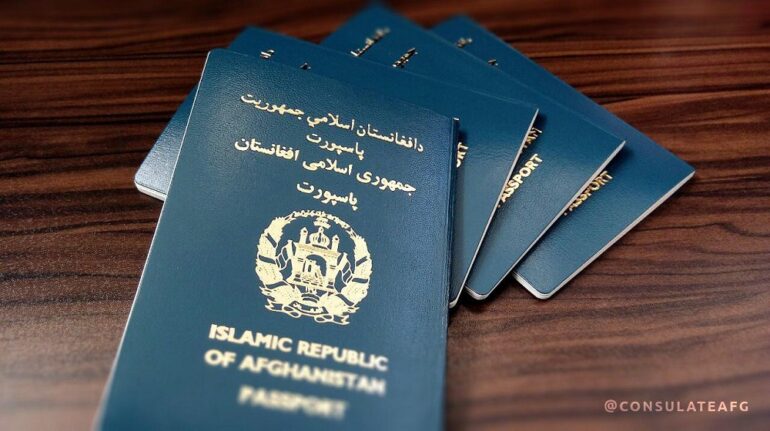

KABUL, AFGHANISTAN – Afghanistan’s passport has again been ranked the least powerful in the world, with holders able to travel visa-free to only 24 destinations, according to the Henley Passport Index 2026 released Wednesday.
The index, compiled by London-based Henley & Partners using data from the International Air Transport Association (IATA), places Afghanistan last among 199 passports surveyed, with visa-free or visa-on-arrival access to 24 countries and territories, including Cambodia, Mozambique, Kenya, Somalia, and Sri Lanka.
Syria ranks second-to-last, offering its citizens access to 26 destinations without a prior visa, followed by Iraq with 29.
The Henley Passport Index ranks passports solely on the number of destinations accessible without a prior visa, including visa-on-arrival and electronic travel authorizations where applicable.
Among Afghanistan’s neighbors, Iran and Pakistan also ranked near the bottom. Iran placed 92nd, allowing travel to 40 destinations, while Pakistan ranked 98th, providing access to 31 countries. Pakistan’s passport improved by five places compared with the previous year, when it ranked 103rd.
At the top of the index, Singapore retained its position as the world’s most powerful passport, with visa-free access to 192 destinations. Japan and South Korea followed in second place, while Denmark, Luxembourg, Spain, Sweden, and Switzerland shared third place.
Afghanistan’s passport has consistently ranked at or near the bottom of the Henley Index for over two decades. Despite the Taliban takeover in August 2021, the document continues to be issued under the name of the former Islamic Republic of Afghanistan.
The low ranking significantly limits opportunities for Afghan citizens, affecting travel, education, business, and participation in international events. Afghan nationals face additional challenges when applying for visas, with stricter scrutiny often applied due to security and migration concerns.
The 168-destination gap between Afghanistan and Singapore highlights stark global inequalities in mobility. Henley & Partners’ Global Mobility Report notes that factors such as ongoing conflict, sanctions, limited diplomatic relations, and security concerns continue to restrict travel for citizens of lower-ranked countries.

