

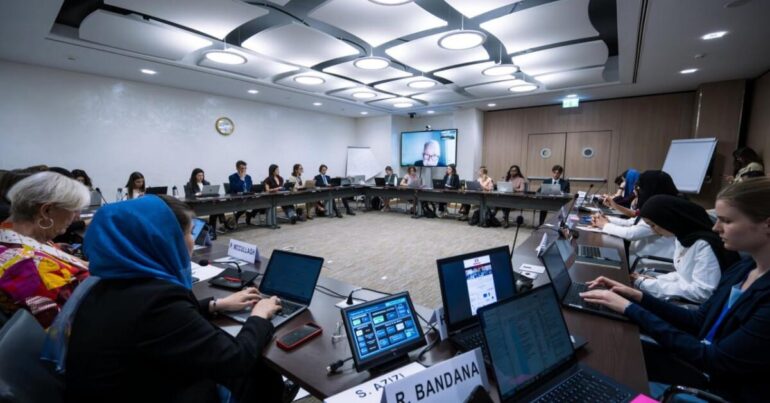

KABUL, AFGHANISTAN – An international conference on Afghan women’s rights concluded in Geneva with calls for justice, accountability and the meaningful participation of women in decisions on Afghanistan’s future, organizers said on Thursday.
The conference, titled “Pathways to Justice and Human Rights for Women in Afghanistan,” was organized by the Shahmama Organization at the United Nations office in Geneva with support from 11 countries, the European Union and U.N. Women.
The gathering brought together representatives from governments, international organizations, U.N. agencies, human rights activists and Afghan women to discuss the worsening human rights situation in Afghanistan and ways to strengthen international efforts for accountability.
In a statement, Shahmama said participants expressed concern over the continued deterioration of women’s rights under Taliban rule and stressed the need to maintain international attention on the issue.
Attendees said Afghan women must be included in all talks and decision-making processes related to the country’s future, warning that sustainable peace and stability would not be possible without their full participation.
“A powerful message emerged from the conference: there can be no justice, no sustainable peace, and no legitimate future for Afghanistan without the full rights, participation, and leadership of women,” the statement said. It added that “Afghan women are not passive victims of oppression—but courageous agents of change, resilience, and hope.”
Richard Bennett, the U.N. Special Rapporteur on the situation of human rights in Afghanistan, who joined the conference virtually, stressed the need for greater use of international legal and human rights mechanisms to ensure accountability for violations against women and girls in Afghanistan.
This was the third such conference organized by Shahmama, a women-led non-profit and non-governmental organization based in Geneva. Inspired by the ancient Bamiyan Buddha statues, the group focuses on amplifying Afghan women’s voices through international advocacy and engagement with global policymakers.
Since the Taliban returned to power in August 2021, they have imposed a series of restrictions on women and girls, including banning secondary and university education for females, restricting most employment, barring access to public spaces such as parks and gyms, and limiting travel without a male guardian.
The United Nations and human rights groups have repeatedly condemned the measures, describing them as systematic discrimination and a form of gender apartheid. Despite growing international calls, including appeals from Muslim-majority countries, the restrictions remain in place, severely limiting women’s access to education, work and public life.

