

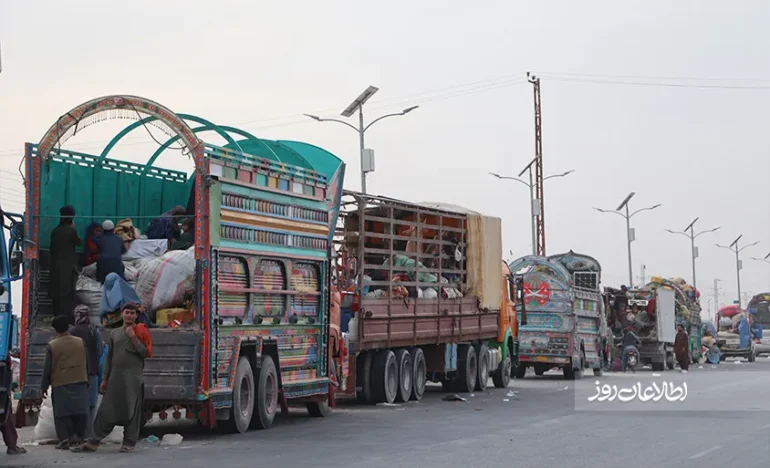

KABUL, AFGHANISTAN – The Taliban’s “Commission for Addressing Returnees’ Issues” announced that 517 Afghan returnee families, comprising 2,719 individuals, were registered after entering Afghanistan through major border crossings on Saturday, June 20.
According to the commission, the returnees entered the country through the Torkham crossing in eastern Afghanistan, the Spin Boldak crossing in southern Afghanistan, and the Silk Bridge crossing in western Afghanistan. The largest number arrived through Torkham, where 388 families, totaling 2,064 individuals, were registered.
The report states that an additional 589 passengers also returned through the Silk Bridge crossing in Nimroz.
The commission said that 783 returnee families, comprising 4,420 individuals, were relocated to various provinces across the country. Financial assistance was provided to 592 families, while healthcare, telecommunications, and other services were offered at reception centers.
Afghanistan has experienced a sharp increase in returns since late 2023 as Pakistan and Iran have intensified enforcement against undocumented Afghan migrants. UN figures indicate that more than 5.4 million Afghans have returned or been deported from the two countries combined since October 2023, with around 2.9 million in 2025 alone.
Nearly 150,000 Afghans have returned from Pakistan and Iran so far in 2026, according to data from the UN refugee agency (UNHCR), adding pressure on already limited resources inside Afghanistan.
The rise in returns comes as Afghanistan faces a worsening humanitarian situation. UN estimates nearly 22 million people, close to half the population, require humanitarian assistance this year, while around 4 million children are suffering from acute malnutrition.
Many returnees are families who had been living in Pakistan and Iran for years or decades and now face difficulties reintegrating into communities with limited infrastructure and economic opportunities. Humanitarian organizations warn that without sustained support, returnees could face rising poverty and displacement inside Afghanistan.
Women and girls remain subject to strict restrictions on education, employment, and other basic rights, limiting household income and access to basic services for many families.
Human rights organizations and international aid agencies have repeatedly called on Pakistan and Iran to halt forced returns. They warn that returnees, particularly women, journalists, activists, and former government officials, risk security threats and possible retaliation upon re-entering Afghanistan under Taliban rule.

