

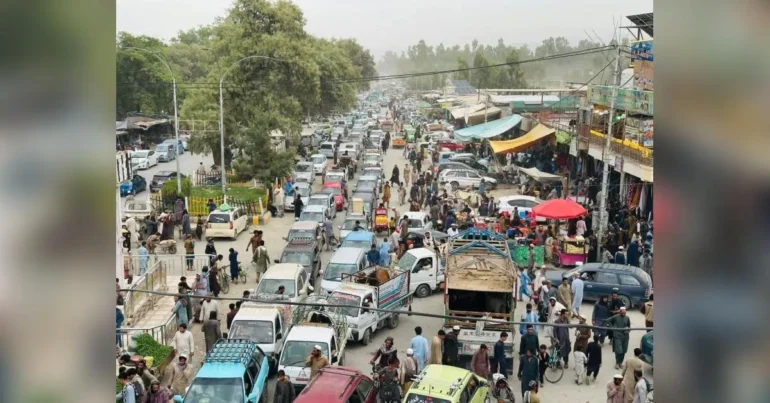

KABUL, AFGHANISTAN – Local sources say that the Taliban’s Ministry for the Propagation of Virtue and Prevention of Vice has ordered shopkeepers who sell women’s goods in Jalalabad, the capital of Nangarhar Province in eastern Afghanistan, and Mehtarlam, the capital of Laghman Province, also located in eastern Afghanistan, not to sell any goods to “women without a mahram” (a male guardian).
According to the sources, Taliban officials issued the directive in recent days while inspecting markets and shops that sell women’s clothing and other items in Jalalabad and Mehtarlam.
A shopkeeper in Mehtarlam told KabulNow newspaper that Taliban officials warned that anyone who violates the order will face four days in prison and the closure of their shop for two weeks.
Sources also say that officials from the Taliban’s Ministry for the Propagation of Virtue and Prevention of Vice in Nangarhar, during meetings with religious scholars and mosque imams in the province, called for preventing the movement of “unveiled women” and for the full implementation of what they described as Islamic law.
Since approving the Law on the Propagation of Virtue and Prevention of Vice, the Taliban have further tightened restrictions on women’s presence in public life and do not allow women to travel without being accompanied by a male mahram.
The group has previously issued similar orders in several other provinces across the country, instructing shopkeepers not to sell goods to “women without a mahram.”
The Taliban have also ordered hospitals, health centers, and drivers in some provinces to refrain from treating or transporting “women without a mahram.”
The Taliban’s Ministry for the Propagation of Virtue and Prevention of Vice has become one of the main institutions responsible for enforcing restrictions on women and girls in Afghanistan since the group returned to power in August 2021. Through inspections, directives, and the implementation of the Law on the Propagation of Virtue and Prevention of Vice, the ministry has imposed measures affecting women’s freedom of movement, access to education, employment, healthcare, and public spaces.
Women are barred from secondary and higher education, face severe limitations on work opportunities, and are often required to be accompanied by a male guardian when traveling or accessing certain services.
These restrictions have drawn widespread criticism from the international community, human rights organizations, and United Nations experts, many of whom have described the systematic exclusion of women from public life as a form of “gender apartheid.” Although gender apartheid is not yet a formally recognized crime under international law, advocates and rights groups argue that the institutionalized segregation and discrimination against women in Afghanistan amount to one of the most severe cases of gender-based oppression in the world today.
The Taliban authorities defend their policies as consistent with their strict interpretation of Islamic law and have given no indication they intend to relax the measures despite mounting international criticism and pressure.

