

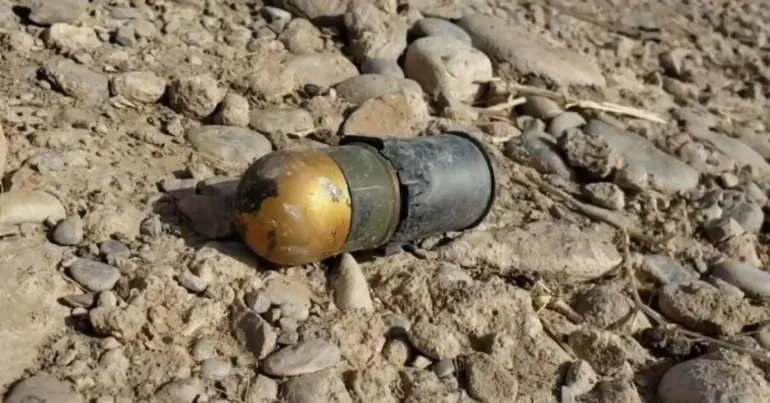

KABUL, AFGHANISTAN – Local Taliban officials say that in two separate explosions involving unexploded ordnance in Sangin district of the Helmand province in southwestern Afghanistan, one child was killed and six other children were injured.
Shir Mohammad Wahdat, deputy director of the Taliban’s Information and Culture Department in Helmand, said that the first explosion occurred on (Saturday, June 13) in the “Chawk Majid” area of Sangin district, injuring four children.
He added that the second explosion occurred at around 10:00 a.m. in the “Ab Zarandi” area of Sangin district, killing one child and injuring two others.
The deputy director of the Taliban’s Information and Culture Department said that the injured were transferred to a hospital for treatment and that their condition is stable.
Explosions caused by unexploded ordnance and landmines in Afghanistan have repeatedly claimed the lives of children and other civilians.
The latest incidents add to a growing toll from land mines and unexploded ordnance across Afghanistan, which remains one of the world’s most heavily contaminated countries after more than four decades of conflict, including the Soviet invasion, civil war, and the two-decade war that ended with the Taliban’s return to power in 2021.
United Nations statistics indicate that approximately 3.3 million Afghans live within one kilometre of areas contaminated with landmines and explosive remnants. The country remains among the worst affected globally for mine and ordnance-related casualties, with children disproportionately impacted as they often encounter the devices while playing outdoors or scavenging for scrap metal.
According to a recent Save the Children report, nearly one Afghan child is killed or injured by explosive ordnance every day on average. Between January 2025 and January 2026, the organization documented 338 children killed, injured, or permanently disabled by such devices, representing nearly 70% of all victims during that period.
Meanwhile, demining and risk-education efforts have slowed in recent years due to declining international funding, forcing some UN agencies and humanitarian organizations to scale back or close mine-action projects.
Aid groups and UN officials continue to call on donors to maintain and increase support for clearance operations and community-based awareness programs to prevent further civilian casualties.

