


KABUL, AFGHANISTAN – The World Health Organization (WHO) has confirmed four new cases of wild poliovirus in Afghanistan this week, bringing the total number of confirmed infections in the country to 11 so far in 2026.
According to WHO’s latest weekly polio update, released on Wednesday, the newly confirmed cases include two in Behsud and Rodat districts of Nangarhar province, one in Musa Qala district of Helmand province, and one in Shindand district of Herat province. WHO said the case in Shindand was identified through contact tracing after exposure to a confirmed infection.
The report also recorded 12 new environmental detections of poliovirus in Afghanistan this week, including five in Kandahar, four in Nangarhar, two in Kabul, and one in Helmand. According to WHO, a total of 46 environmental samples have tested positive for poliovirus across the country since the beginning of the year.
Last year, Afghanistan reported 21 human cases of wild poliovirus and 94 positive environmental samples, underscoring the continued circulation of the virus despite ongoing eradication efforts.
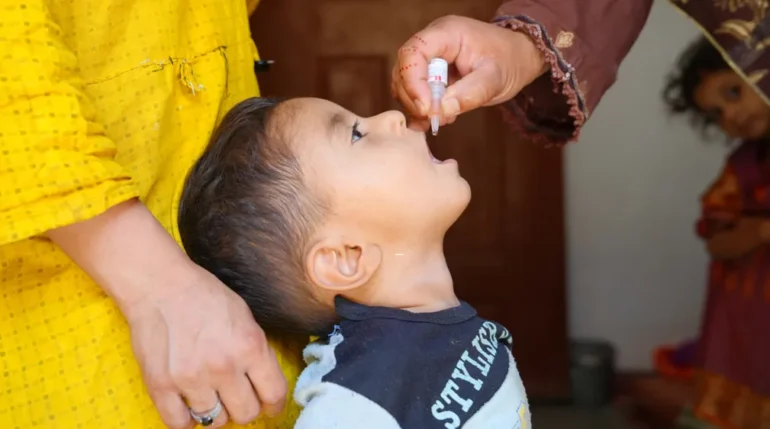
Earlier this month, Afghanistan launched a targeted polio vaccination campaign in parts of the southern provinces of Kandahar and Helmand, two of the country’s highest-risk areas for poliovirus transmission. The campaign, which began on July 6, covered Kandahar city and Lashkargah, as well as the districts of Nahr-e Saraj, Musa Qala, Washir, Nad Ali, and Marjah in Helmand.
Health authorities urged families to ensure that all children under the age of five received the vaccine, emphasizing that widespread immunization remains essential to eradicating polio in Afghanistan.
Afghanistan and neighboring Pakistan remain the only two countries in the world where wild poliovirus has never been eradicated. WHO data show that Pakistan has also recorded three confirmed polio cases so far in 2026.
Health experts have repeatedly warned that persistent cross-border population movement, gaps in vaccination coverage, and continued virus transmission in high-risk areas pose significant challenges to global polio eradication efforts.
WHO has also stressed the importance of maintaining high-quality surveillance and immunization campaigns in both endemic countries to prevent further spread of the disease.

