

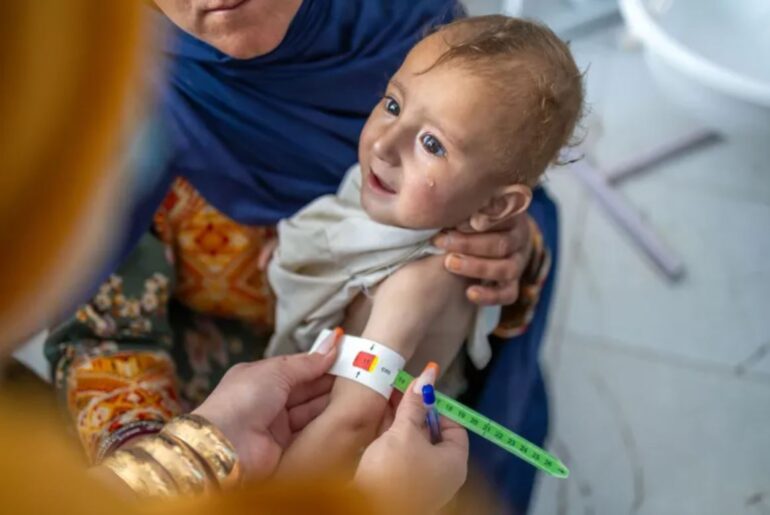

KABUL, AFGHANISTAN – The United Nations Children’s Fund (UNICEF) has called for urgent action and increased funding, warning that millions of children in Afghanistan face a growing risk of acute malnutrition as the country enters its annual peak wasting season.
In a new report, “Too Little, Too Late: The Diet Crisis Facing Young Children in Afghanistan,” UNICEF said nearly 3.7 million children are at heightened risk of malnutrition, with conditions worsening in much of the country ahead of the July-to-September peak season.
The UN agency said acute malnutrition has deteriorated in 26 of Afghanistan’s 34 provinces compared with 2025, reflecting growing food insecurity, poor diets, and mounting economic pressures on families.
According to the report, young children are increasingly showing signs of nutritional stress before the peak season begins. UNICEF recorded warning indicators, including reduced dietary diversity, fewer daily meals, lower consumption of nutrient-rich foods, and rising levels of hunger among children.
Children under the age of two are bearing the brunt of the crisis, accounting for 83% of severe acute malnutrition cases and 77% of moderate acute malnutrition cases, the report said.
“Young children in Afghanistan are being pushed closer to malnutrition before the peak season has even begun,” UNICEF Representative in Afghanistan Tajudeen Oyewale said. “This new evidence gives us an opportunity to act before children reach the point of severe malnutrition,” he added.
UNICEF said severe wasting, one of the most dangerous forms of malnutrition, can rapidly become life-threatening if left untreated and significantly increases children’s vulnerability to common infectious diseases. Children living in severely food-insecure households are up to six times more likely to suffer from severe wasting during the peak season, according to the report.
The agency said worsening malnutrition is being driven not only by inadequate diets and rising food insecurity but also by disease outbreaks, low vaccination coverage, insufficient water, sanitation, and hygiene services, and widening funding and supply gaps.
Many families across Afghanistan have been forced to adopt coping strategies such as reducing meal portions, skipping meals, and removing nutritious foods from children’s diets as they struggle with economic hardship, UNICEF said.
The agency warned that the opportunity to prevent more children from falling into life-threatening malnutrition is narrowing as the peak season approaches and called for urgent, flexible funding to expand assistance and reach vulnerable families.
Afghanistan remains one of the world’s largest and most protracted humanitarian crises, with millions of people dependent on aid. The UN has said nearly 22 million people in the country require humanitarian assistance this year. However, aid agencies continue to face significant funding shortages, raising concerns over the sustainability of health, nutrition and food assistance programs.
Humanitarian organizations have urged donors to maintain and increase support, warning that further funding gaps could deepen food insecurity, weaken essential services and expose more Afghan children to preventable illness and death.

