

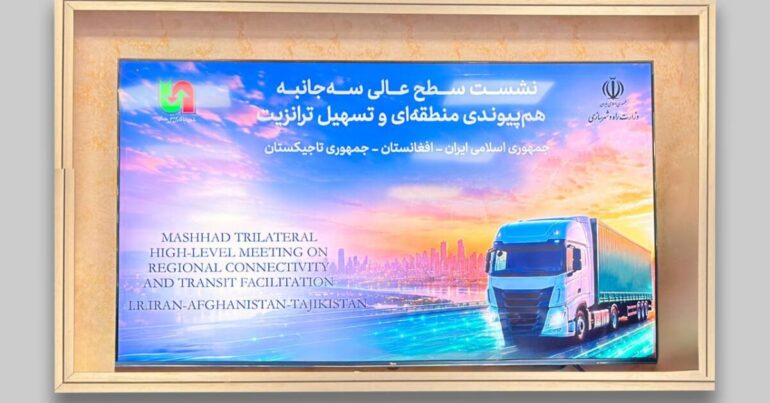

KABUL, AFGHANISTAN – Taliban, Iran, and Tajikistan have signed a trilateral agreement to establish a new road transit corridor aimed at expanding regional trade and enhancing transportation links between the three countries, Taliban authorities said.
In a statement on Thursday, the Taliban Ministry of Transport and Civil Aviation stated that the agreement was reached during a trilateral meeting held in the northeastern Iranian city of Mashhad, where officials discussed measures to enhance transit cooperation and improve connectivity across the region.
The new corridor would facilitate the movement of commercial goods between Iran and Tajikistan through Afghan territory, potentially increasing Afghanistan’s role as a transit hub linking Central Asia with neighboring markets, the ministry said.
According to the statement, Yar Mohammad Ramazan, head of the Taliban ministry’s Department of Land Transport Laws and Agreements, attended the talks as part of the Taliban delegation.
Iranian media reported that Reza Akbari, Iran’s deputy minister of roads and urban development and head of the Road Maintenance and Transportation Organization, and Shayesteh Saidmoradzadeh, Tajikistan’s deputy transport minister, also participated in the meeting and signed the agreement.
According to the reports, the first trial cargo shipment along the route is expected within a month, using trucks from all three countries.
The parties also agreed to establish a joint working group to address administrative procedures, facilitate visa issuance for drivers, reduce border delays and develop insurance arrangements for cross-border transport.
Iranian media stated that the participants agreed to hold a second round of trilateral talks in Kabul in October-November to finalize a long-term cooperation document and review progress on the implementation of the transit corridor.
The agreement comes as relations between Pakistan and the Taliban authorities remain strained over security concerns and militant activity. Tensions have intensified in recent years, with Islamabad accusing the Afghan Taliban of allowing militant groups, including Tehrik-e-Taliban Pakistan (TTP) and its affiliates, to use Afghan territory to plan and launch attacks inside Pakistan, allegations the Taliban authorities deny.
The tensions have been accompanied by periodic border clashes, stricter border controls and disruptions to trade and transit through key crossings along the two countries’ shared frontier. Major border crossings have remained closed since October last year, restricting the movement of people and goods and disrupting regional trade. The closures have particularly affected Afghan traders, who have long depended on Pakistan’s ports and transit routes to access international markets.

