

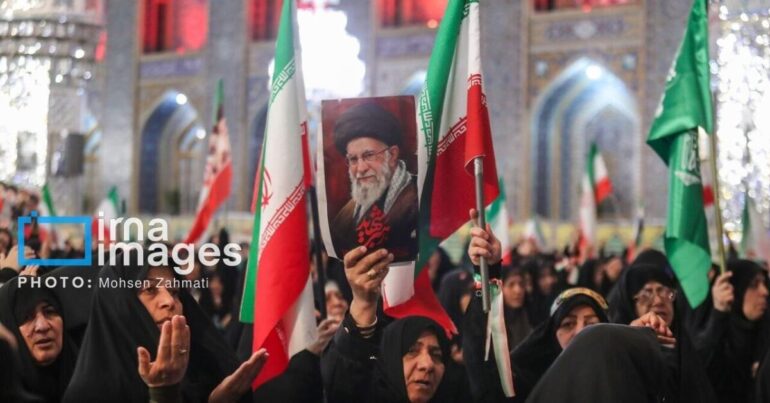

KABUL, AFGHANISTAN – Iran will issue around 2,500 free visas to Afghan nationals so they can attend the long-delayed funeral of Supreme Leader Ali Khamenei, officials said on Thursday.
The Islamic Republic is preparing a multi-day state funeral for the 86-year-old leader, who was killed in a joint U.S.-Israeli airstrike on his compound in Tehran on Feb. 28. Ceremonies are scheduled to begin on July 4 in Tehran, continue in the city of Qom, and conclude with his burial in the northeastern city of Mashhad on July 9, Iranian state media reported.
As reported by Iranian media, Ali Askari, deputy governor for cultural, social, and pilgrimage affairs in Razavi Khorasan Province, said around 4,000 Afghan citizens were expected to travel to Mashhad for the ceremony. In addition to those arriving on the free visas, a number of Afghan migrants already residing in Iran will also participate, he added.
He did not provide further details on the duration of the visas or whether Iran would cover travel, accommodation, or other expenses for those attending.
Iranian officials are preparing for one of the largest gatherings in the country’s recent history, with expectations of 15 million to 20 million participants across the multi-day events. They also expect guests from around 100 countries, including political figures, heads of state, parliamentary speakers, foreign ministers and special government envoys.
A senior Taliban delegation, led by Abdul Ghani Baradar, the group’s deputy prime minister for economic affairs, and including Foreign Minister Amir Khan Muttaqi, departed Kabul on Thursday for the funeral, according to the Taliban foreign ministry.
The visit comes as the Taliban seeks to deepen relations with Tehran. Although Iran has not formally recognized the Taliban administration in Afghanistan, the two sides maintain diplomatic relations and continue to engage in discussions on trade and economic cooperation.
Ali Khamenei’s death ended more than three decades of rule as Iran’s supreme leader. His funeral was delayed for months over security concerns amid regional conflict and continued bombardments following his killing.

