

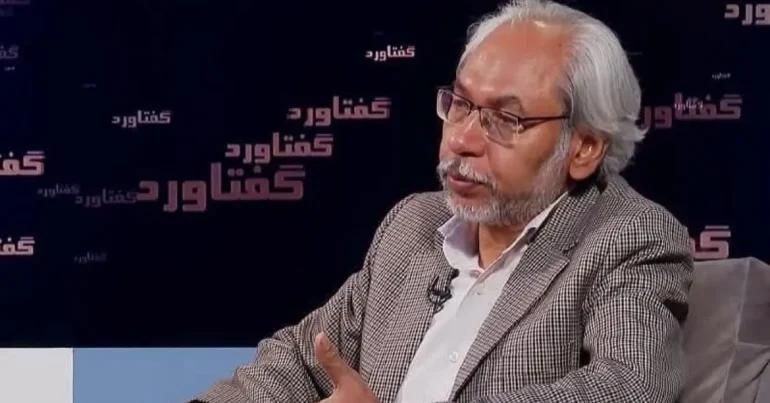

KABUL, AFGHANISTAN – Tamadon Television has announced that Mohammad Rahmati, the station’s Director General, and Mohammad Reza Ehsani, an employee of the media outlet, have been arrested on the orders of the Taliban’s Ministry of Justice.
In a statement published today (Saturday, June 27) on its official Facebook page, the television station said the two men were arrested six days ago and are currently being held in solitary confinement.
Tamadon Television called on the “relevant authorities” to immediately release the detainees, stating that they were arrested “without a court order and without any charges being announced.”
The broadcaster added that the Director General’s “medical condition” does not permit imprisonment and warned that “any harm that may befall him will be the direct responsibility of the authority that ordered his detention without legal grounds.”
According to the statement, the two men were arrested two days before forces affiliated with the Taliban’s Ministry of Justice raided Tamadon Television’s headquarters and suspended its broadcasts.
The latest development follows the Taliban’s raid on Tamadon Television earlier this week.
On Tuesday, forces affiliated with the Taliban’s Ministry of Justice stormed the broadcaster’s headquarters in Kabul, halted its transmissions, sealed its offices, and shut down the Khatam al-Nabieen Seminary over allegations that their buildings had been constructed on state-owned land. Officials from both institutions said the case is still under review by a special Taliban court and that no final ruling has been issued.
Tamadon TV, founded in 2006 in Kabul by the late Shiite cleric Sheikh Asif Mohseni, broadcasts news, religious programs, and cultural content. The station has previously faced restrictions and temporary shutdowns under Taliban rule over programming and ownership disputes.
The incident is the latest in a series of actions targeting Afghan media since the Taliban returned to power in August 2021. Media watchdogs have reported increasing restrictions, detentions of journalists, and pressure on outlets, leading to a sharp decline in press freedom.
These measures have contributed to the near-collapse of what was once a vibrant media sector, with dozens of outlets shut down or silenced and hundreds of journalists forced into exile or hiding.
Afghanistan ranked 175th out of 180 countries in Reporters Without Borders’ 2026 World Press Freedom Index, placing it among the worst globally.
The closure of Tamadon Television and the detention of its staff have raised renewed concerns about media freedom and due process in Afghanistan.
Since the Taliban takeover, authorities have issued more than 20 directives regulating media activity, content approval, and access to information. Media watchdogs have reported increasing restrictions, detentions of journalists, and pressure on outlets, leading to a sharp decline in press freedom.

