

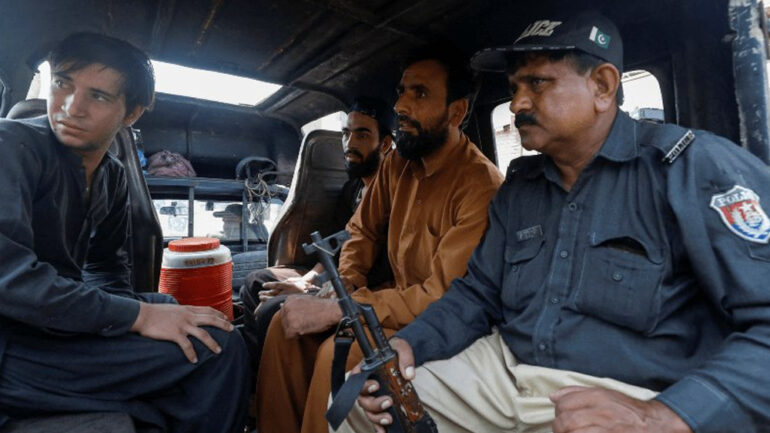

KABUL, AFGHANISTAN – Pakistan’s Ministry of Interior has ordered authorities to begin the arrest of undocumented Afghan migrants from July 10 and instructed that all individuals living in Pakistan without a valid visa be “immediately arrested.”
According to the newspaper Dawn, the directive was issued on Sunday (June 28). It instructs provincial governments and the Chief Commissioner of Islamabad that “the matter must be accorded the highest priority and its complete and meticulous implementation must be ensured.”
The Ministry of Interior also instructed the relevant authorities to submit daily reports on the arrest of undocumented Afghan migrants starting from July 11. These reports must include the number of Afghan nationals identified without valid visas, the actions taken against them, and their current status.
According to the ministry’s statement, the decision was made during a meeting held on June 1 to review the “Illegal Foreigners Repatriation Plan.”
Pakistan launched the “Illegal Foreigners Repatriation Plan” in 2023. Following the initiative, it canceled temporary residence documents for Afghan migrants, including the Afghan Citizen Card (ACC) and the Proof of Registration (PoR) card, and began the process of detaining them.
According to figures from the United Nations High Commissioner for Refugees (UNHCR), Pakistan deported more than 1.155 million migrants to Afghanistan in 2025 alone.
The surge in returns coincides with the ongoing conflict between Pakistan and the Taliban. Islamabad closed major border crossings in late February after hostilities escalated, severely disrupting trade and travel. The crossings were reopened in recent days primarily to facilitate the movement of deportees, while other forms of cross-border movement remain heavily restricted.
Meanwhile, Afghanistan is grappling with a worsening humanitarian crisis. The United Nations estimates that nearly 22 million people — almost half the population — require humanitarian assistance this year, while around 4 million children are suffering from acute malnutrition.
Many returnees are families who lived in Pakistan and Iran for years or decades. They now face limited infrastructure, weak economic opportunities, and widespread poverty in Afghanistan.
Humanitarian agencies have warned that continued large-scale returns without sustained international support could deepen poverty and trigger further displacement. Women and girls are considered particularly vulnerable due to restrictions on education, employment and public life under Taliban rule.
Human rights groups and international aid agencies have repeatedly urged Pakistan and Iran to halt forced returns, citing a worsening humanitarian crisis and security risks, including possible retaliation faced by returnees — particularly women, journalists, activists and former government officials — under Taliban rule.

