

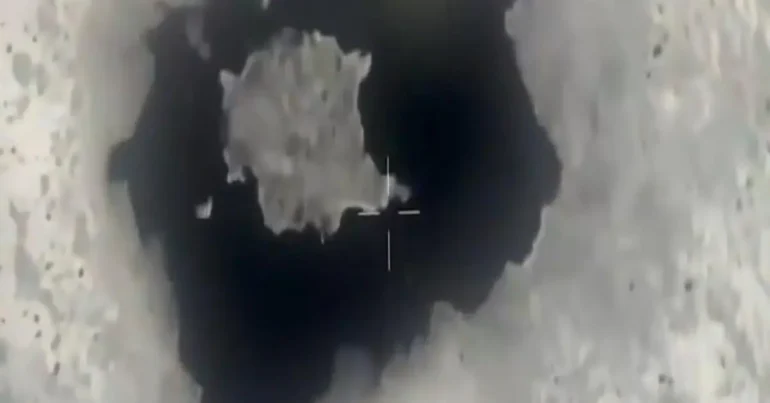

KABUL, AFGHANISTAN – Pakistan’s Minister for Information and Broadcasting, Ataullah Tarar, says that 26 members of the group known as “Fitna al-Khawarij” (TTP) were killed in Pakistani strikes on what he described as the group’s hideouts and safe havens inside Afghanistan.
In a statement issued today (Wednesday, June 10), Tarar said the strikes were carried out in response to “recent terrorist incidents in Pakistan,” including an attack on a police checkpoint in Musa Dara, a suicide attack on a checkpoint in North Waziristan, and another attack on a police post in Bannu.
The Pakistani minister described the operations as “precise and calculated” and stated that the camps and hideouts were targeted and destroyed with accuracy.
He further added that among the facilities destroyed were a training center, a hideout, an ammunition depot, and a center belonging to Fitna al-Khawarij commanders Aleem Khan Khushali and Akhtar Mohammad Janikhel.
Meanwhile, Taliban spokesperson Zabihullah Mujahid said that at least 13 people, including 11 children, one woman, and one adult man, were killed and 14 other women and children were wounded in Pakistan’s latest airstrikes on the provinces of Khost, Kunar, and Paktika.
In a statement released this morning (Wednesday, June 10), the Taliban spokesperson said that the strikes, which were carried out last night, targeted “civilian homes.”
He added: “We strongly condemn this inhumane crime and aggression in the strongest terms.”
The Pakistani military and government have not yet commented on these claims.
However, one month ago, tribal elders from Kunar Province and Bajaur District reached a ceasefire agreement aimed at reducing tensions along the border following weeks of clashes between Taliban and Pakistani forces.
Under the agreement, both sides are required to return to their previous positions and refrain from crossing or violating each other’s territory. The elders also agreed that authorities on each side would be held responsible for attacks originating from areas under their control.
A similar ceasefire agreement was earlier reached between tribal elders from Chitral District and Nuristan Province. Following that agreement, several transport routes in Nuristan that had been closed by Pakistan were reopened.
In response to the latest developments, former Afghan President Hamid Karzai strongly condemned Pakistan’s airstrikes on Khost, Kunar, and Paktika provinces.
In a statement issued today (Wednesday, June 10), Karzai described the attacks as a “violation of Afghanistan’s sovereignty” and expressed his condolences to the families of the victims.
He added: “ Pakistan is grappling with the consequences of its ill-considered policies and hostile actions in the region, and it must realize that it will not achieve its goals by persisting with and pursuing those policies.”
The former Afghan president further said that “Pakistan’s interest lies in abandoning a policy of war and destruction toward Afghanistan and choosing good neighborly relations and civilized engagement.”
The latest exchange of accusations highlights the continuing tensions between Pakistan and the Taliban administration, despite recent efforts by tribal elders to reduce hostilities. While Pakistani officials describe the strikes as counterterrorism operations targeting TTP infrastructure, the Taliban insist that civilian areas were hit, resulting in significant casualties.
The incident is likely to further strain relations between the two sides and raise concerns about security and stability along the Afghanistan–Pakistan border, where disputes over militancy, cross-border attacks, and sovereignty have remained major sources of tension in recent years.
Clashes between Pakistani security forces and Taliban fighters have continued intermittently for more than two months. Broader trade, transit and land travel between the two neighbours have been suspended for around eight months following a previous round of border clashes last year.
Pakistan has long accused the Afghan Taliban of providing safe havens to militant groups, particularly the Tehrik-i-Taliban Pakistan, and allowing them to plan and carry out attacks inside its territory. The Taliban reject these allegations, saying insecurity in Pakistan is due to shortcomings within Pakistani security forces.

