

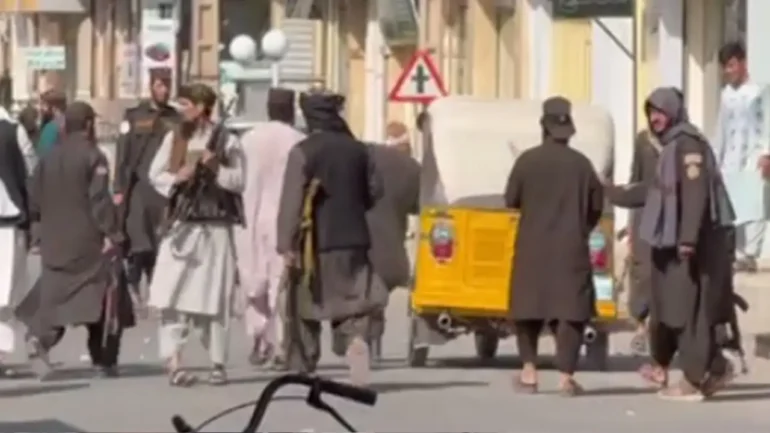

KABUL, AFGHANISTAN – Local sources in Herat say that following yesterday’s protest by residents of the Jebrail area, the Taliban collected and removed the hard drives of surveillance cameras installed on streets, homes, and shops in the neighborhoods where the protests took place.
At least three sources told KabulNow that they witnessed Taliban intelligence personnel collecting the hard drives of surveillance cameras.
One source said he saw the Taliban remove and take away the hard drives from at least two shops. Following the removal, the shops’ monitor screens went dark and the cameras became inactive.
According to the sources, the purpose of this action was to “prevent the publication of surveillance camera footage” and also to “identify and track down” protesters.
After the Taliban detained dozens of women in Herat, a number of residents of the Jebrail area staged a protest yesterday, chanting the slogan “Education, Work, Freedom.” However, the Taliban dispersed the demonstration within minutes by firing live ammunition and using sticks.
Local sources confirmed that at least four people, including a child, were injured and taken to nearby hospitals for treatment. Some accounts also reported that a woman and a child were killed by Taliban gunfire, although KabulNow could not independently verify these reports.
The United Nations Assistance Mission in Afghanistan (UNAMA) has confirmed that at least one person was killed and several others were injured as a result of gunfire during the protests. UNAMA also said that it is investigating reports regarding the death of another individual during the demonstrations.
The Taliban’s detention of women and girls has drawn widespread international criticism. The United Nations Assistance Mission in Afghanistan (UNAMA), UN Special Rapporteur Richard Bennett, Amnesty International, and other rights organizations have called for an immediate end to the crackdown.
Since returning to power in 2021, the Taliban have imposed sweeping restrictions on women and girls, including bans on secondary and university education, limits on employment, and strict rules governing dress and movement. Human rights organizations and UN officials have repeatedly criticized the measures as systematic discrimination against women and girls.

