

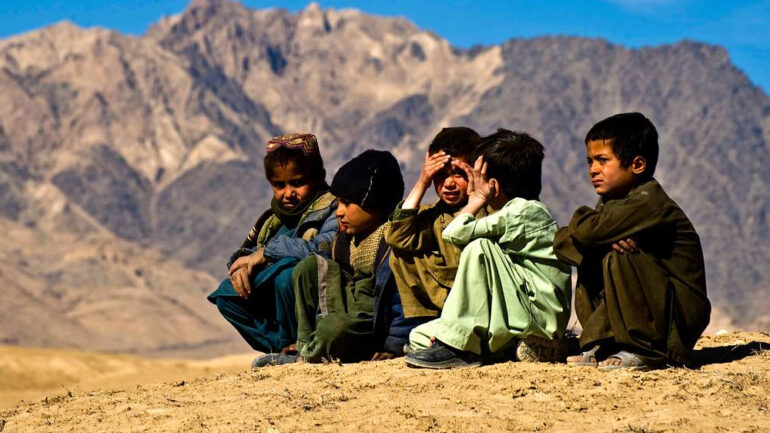

KABUL, AFGHANISTAN – Afghanistan has ranked last among 194 countries in the 2026 Children’s Rights Index, maintaining its position as the worst country in the world for children, according to a report released on Wednesday.
The annual index, published by the Netherlands-based KidsRights Foundation in collaboration with Erasmus University Rotterdam, assessed countries on indicators including life and health, education, protection, and the enabling environment for children.
Afghanistan scored 0.214 in the 2026 index, compared with 0.209 in 2024 and 0.206 in 2025, with the country consistently placed at the bottom of the ranking in recent years.
The report said conflict, insecurity, and weak living conditions continue to undermine children’s rights globally, particularly in fragile states.
“Children are increasingly exposed to risks they did not create and cannot control,” said Marc Dullaert, founder and chairman of KidsRights. “Whether children are growing up in the shadow of war or in environments that undermine their health, the result is the same: their rights, wellbeing, and future opportunities are being put at risk.”
Afghanistan was ranked alongside Chad and Guinea among the lowest-performing countries, while Luxembourg, Iceland, and Monaco topped the index. Pakistan ranked 149th and Iran 86th.
In Afghanistan, girls face particularly severe challenges, including serious gender discrimination under Taliban rule, the report said, citing concerns raised by the UN Committee on the Rights of the Child. The country’s legal framework is complicated by overlapping and sometimes contradictory sources of law — codified, customary, and religious — with some provisions violating the Convention on the Rights of the Child.
According to the report, Afghanistan lacks a comprehensive system for collecting data on children, with limited disaggregated information on girls, poor children, and children with disabilities. It also noted insufficient education funding.
Since regaining power, the Taliban have banned girls from secondary education beyond grade six, significantly restricting access to schooling and weakening legal protections for children’s rights. Food insecurity also remains severe, with about half of Afghan children facing acute food poverty.
A recent UNICEF report further highlighted that more than 8.8 million children are simultaneously exposed to three major climate hazards: droughts, floods, and heatwaves.
Child marriage is also on the rise largely due to the Taliban’s restrictive policies. About a month ago, the group issued a “Code on Separation of Spouses,” which UN experts and agencies, rights organizations say implicitly endorses child marriage and increases risks for young girls.

