

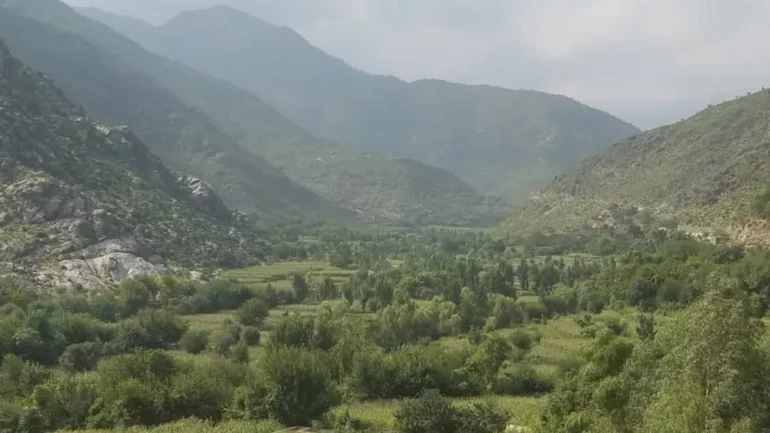

KABUL, AFGHANISTAN – Fereydoun Samim, spokesperson for the Taliban governor in Nuristan, says that a woman has died and two others were injured after lightning struck members of a family in the Want District.
Samim told KabulNow that the incident occurred on Sunday afternoon (May 10) in the “Dehuz” area.
He added that one woman was killed, while a seven-year-old girl and a man were injured in the incident.
According to him, all of the victims were members of the same family.
The injured were transferred to a local hospital, and their condition has been described as “satisfactory.”
This comes as two people were also killed and three others injured yesterday after being struck by lightning in the Momand Dara District and Bati Kot District districts of Nangarhar.
Lightning strikes, due to the extremely powerful electric current they carry — sometimes reaching millions of volts — can cause severe brain and nervous system damage, cardiac arrest, respiratory failure, serious burns, and even death within fractions of a second.
To reduce the risk, people should avoid standing under trees during storms and heavy rain accompanied by lightning, stay away from open spaces, metal objects, and water, and seek shelter inside buildings or covered areas.
This incident comes amid a broader pattern of severe weather-related disasters in Afghanistan.
One month earlier, at least 28 people were killed and 49 others injured after several days of heavy rainfall triggered flash floods, landslides, and lightning strikes across multiple provinces, according to Taliban authorities. The Taliban-run Afghanistan National Disaster Management Authority (ANDMA) reported that the casualties occurred over a four-day period as intense rain affected large parts of the country, including both urban and rural areas.
The authority further stated that around 1,130 families were impacted since March 26, with extensive damage to homes, farmland, and infrastructure. In total, 568 houses were either fully or partially destroyed, along with 10 shops.
This incident highlights how natural disasters such as lightning strikes continue to pose risks in different parts of Afghanistan, particularly in rural and mountainous areas where emergency response systems and public safety infrastructure remain limited.
Afghanistan remains highly vulnerable to natural disasters due to fragile infrastructure, environmental degradation, and limited disaster response capacity, particularly in remote areas.

