

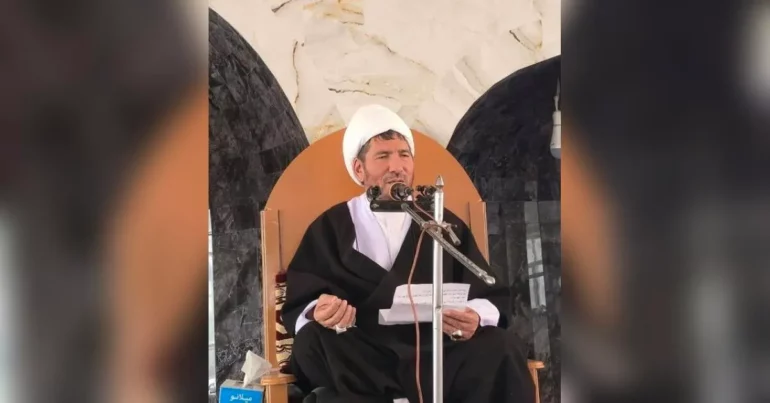

KABUL, AFGHANISTAN – Local sources in Kabul say that the Taliban’s Ministry for the Promotion of Virtue and Prevention of Vice officers in Kabul’s District 18 arrested a Hazara girl and boy and insulted and physically assaulted a Shiite religious scholar.
According to the sources, on Wednesday of last week (May 6), Taliban morality police arrested a young girl and boy who were engaged to each other and had gone to the Dasht-e-Barchi market in western Kabul to shop for their wedding ceremony, accusing them of being “non-mahram” (unrelated and unlawfully together), and transferred them to District 18.
According to information provided by the sources, the two young people told the Taliban at the district office that they were legally married and that their marriage contract had been officiated by “Hussain Dad Sharifi,” a well-known Shiite religious scholar.
Sources say that following this, the head of the Taliban’s Ministry for the Promotion of Virtue and Prevention of Vice in Kabul’s District 18 summoned the Shiite scholar to his office and asked him why he had officiated the marriage contract of the two young people before their wedding ceremony had taken place.
According to the sources, the Taliban official claimed that the two young people had now committed “zina” (fornication) and held the Shiite scholar responsible for it.
Based on reports from the sources, the Taliban official, without giving the scholar a chance to explain himself or speak, stood up and physically assaulted him with punches and kicks, while also insulting and humiliating him.
Sources say the scholar was released after signing a “pledge letter,” but the two engaged young people remain in detention at District 18.
Since regaining control of Afghanistan, the Taliban have imposed sweeping restrictions on the movement of young women and men in markets and cities and have repeatedly detained and interrogated young couples on accusations of being “non-mahram.”
Furthermore, this incident comes amid broader concerns over the Taliban’s recently enforced “Criminal Procedure Code for Taliban Courts,” formally approved by the group’s leadership three months ago. The code, consisting of 119 articles, has been widely criticized by rights groups and Afghan diplomatic missions for undermining due process and institutionalizing discrimination.
Critics say the code conflicts with international human rights standards by denying basic legal protections such as access to defense lawyers, the right to remain silent, and fair trial guarantees. It also reportedly classifies non-Hanafi Sunni Muslims and followers of other beliefs — including Twelver Shiites, Ismailis, Sikhs, and Hindus — as religious “innovators,” raising concerns of systematic discrimination against minorities.
Moreover, human rights group Rawadari has warned that some provisions could legitimize arbitrary punishment and even extrajudicial killings by labeling dissenters and critics as “agents of corruption.” Observers say the code grants sweeping powers to Taliban courts and individuals aligned with the group, reinforcing fears that incidents such as the detention of the Hazara couple and the assault on the Shiite cleric reflect a wider effort to impose discriminatory legal and religious control across Afghanistan.

