

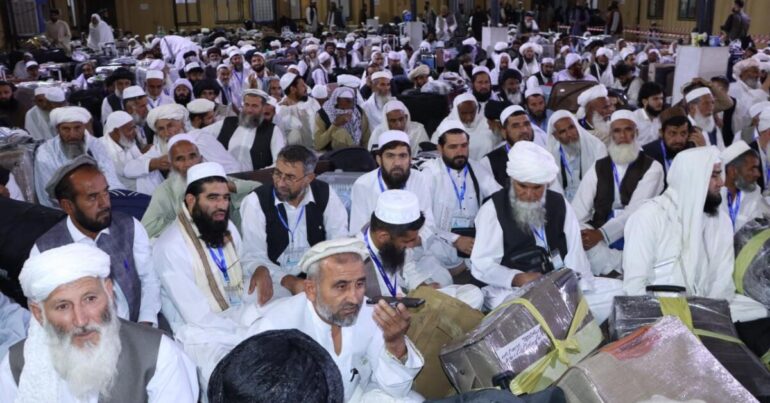

KABUL, AFGHANISTAN –More than 30,000 Afghans have been transferred to Saudi Arabia to perform this year’s Hajj pilgrimage, with the process now completed, the Taliban Ministry of Hajj and Religious Affairs announced Thursday.
In a statement, the ministry said the pilgrims were transported on 97 flights to the Saudi cities of Jeddah and Medina ahead of the annual Hajj rituals, which take place in and around Mecca.
The ministry added that medical teams and supplies, including essential medicines, were also sent alongside the pilgrims to support their health needs during the journey and stay in Saudi Arabia.
According to the ministry, each pilgrim paid AFN 266,000 (approximately $4,200). The fees, which total around AFN 8 billion ($127 million), cover air travel, accommodation in Saudi Arabia, food, medical services, and other logistical arrangements during the pilgrimage.
Some Afghan pilgrims, however, have voiced dissatisfaction in videos posted on social media from Mecca in recent weeks. They complained about shortcomings in transportation, accommodation standards, food quality, and the knowledge of Taliban-appointed guides regarding Hajj rituals, saying the services fell short of what was promised for the substantial sum paid.
A similar number of Afghans performed the Hajj in the past two years. For many families across Afghanistan, the pilgrimage remains a major religious commitment that often requires years of saving and preparation. In some cases, families sell property or livestock, or borrow money, to finance the journey.
The large annual spending on the Hajj pilgrimage comes as Afghanistan continues to face a deep humanitarian crisis. Nearly half of the population, about 22 million people, relies on international aid amid economic decline, shrinking foreign assistance, political isolation, and recurring natural disasters.
Taliban authorities portray the successful collection of fees and completion of the pilgrim transfers as a major achievement for the group. Critics, however, argue that the focus on such events highlights a gap with the everyday struggles of ordinary Afghans, who face difficulties securing basic needs such as food, healthcare, and education. In rural areas, families have increasingly turned to child labor and early marriages to cope with economic hardship.
Foreign aid, which financed a significant share of Afghanistan’s public spending before the Taliban returned to power in 2021, has fallen sharply in recent years. The decline has affected healthcare, education, and humanitarian programs across the country.
Humanitarian organizations continue to call for increased international support and improved aid delivery mechanisms, warning that continued economic pressure and declining assistance could deepen poverty and inequality across Afghanistan.

