

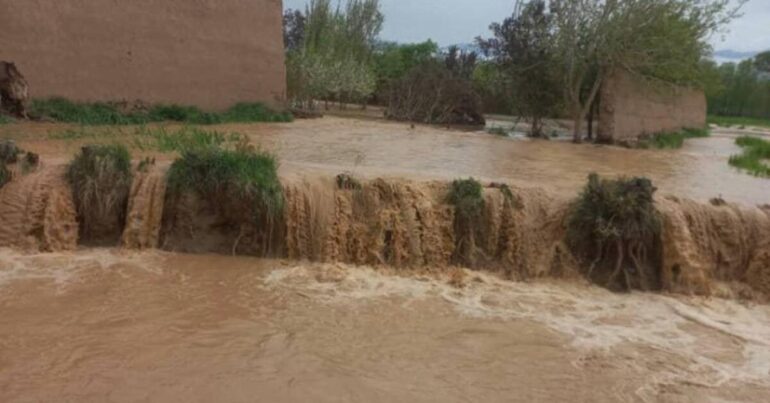

KABUL, AFGHANISTAN – More than 10,000 families across Afghanistan have been affected by flooding since the beginning of 2026, according to a statement published on Monday, May 25, by International Organization for Migration, as heavy rainfall once again triggered flash floods in northern provinces.
The organization said renewed flooding struck Baghlan, affecting families who were already struggling to recover from earlier disasters.
IOM said its emergency teams were immediately deployed alongside partner organizations to assess urgent humanitarian needs, while relief operations continue in both Baghlan and Balkh following previous waves of destructive flooding.
According to IOM, Afghanistan has faced an unusually severe pattern of extreme weather this year, with repeated heavy rainfall, flash floods, seasonal storms, and climate-related shocks linked to the ongoing El Niño phenomenon intensifying risks across several provinces.
The renewed disaster comes amid an unusually severe year of extreme weather in Afghanistan, marked by repeated heavy rainfall, flash floods, seasonal storms, and climate-related shocks linked to the ongoing El Niño phenomenon.
Earlier assessments by the United Nations Office for the Coordination of Humanitarian Affairs had already highlighted the scale of the crisis. According to an update published four weeks ago, heavy rainfall and flash floods between mid-March and late April affected more than 73,000 people across all 34 provinces of Afghanistan, leaving around 57,000 in urgent need of humanitarian assistance.
OCHA reported that the floods caused widespread destruction, particularly in eastern and southern regions, killing and injuring several hundred people overall. Around 1,500 homes were completely destroyed and another 6,000 damaged, while roads, bridges, farmland, and other key infrastructure suffered major losses.
Furthermore, while more than 31,100 affected people have received emergency support—including food assistance, cash aid, temporary shelter, clean water, sanitation services, healthcare, nutrition support, and protection services—thousands remain vulnerable as severe weather continues.
Climate experts have warned that Afghanistan remains highly exposed to extreme weather due to years of environmental degradation, prolonged drought cycles, weak infrastructure, and limited disaster preparedness capacity. Sudden shifts from drought to intense rainfall have significantly increased the risk of flash floods and landslides.
As a result, humanitarian agencies have stressed that emergency relief stocks must be urgently replenished to sustain rapid response efforts in the coming months, warning that additional climate-driven disasters could further deepen Afghanistan’s already severe humanitarian crisis.
Afghanistan is one of the world’s most disaster-prone countries, highly vulnerable to floods, droughts and earthquakes because of its fragile infrastructure, environmental degradation and limited response capacity, especially in remote mountainous areas.
The latest flooding has further strained the country’s already severe humanitarian situation. According to UN estimates, nearly 22 million people across Afghanistan require humanitarian assistance, while more than 17 million people — the majority of them women and children — are facing acute food insecurity.

