


KABUL, AFGHANISTAN – At least 372 civilians were killed and 397 others wounded in clashes between Taliban forces and Pakistan in Afghanistan during the first three months of 2026, the United Nations Assistance Mission in Afghanistan (UNAMA) stated in a report published on Tuesday.
The report, prepared by UNAMA’s human rights section, said the majority of the casualties occurred following Pakistan’s launch of “Operation Ghazab lil Haq” on Feb. 26. More than half of all civilian deaths and injuries were linked to Pakistani airstrikes on March 16 that struck the Omid Drug Rehabilitation Hospital in Kabul.
UNAMA said it independently verified that 269 people were killed and 122 were injured in the hospital attack, though it warned the actual number could be significantly higher due to challenges in accounting for all victims.
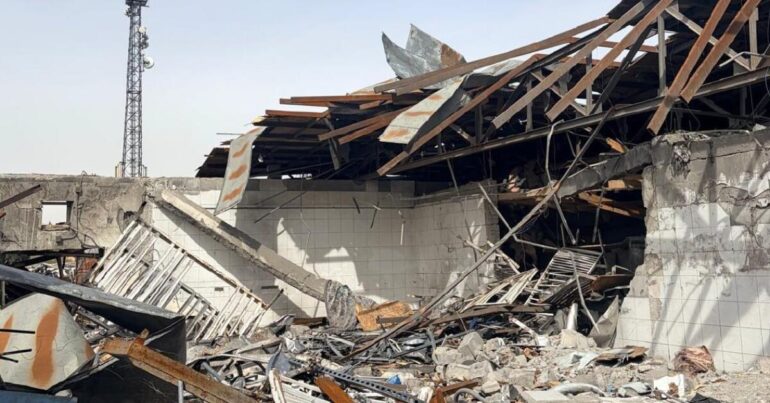
The mission detailed that the hospital compound was hit by three separate airstrikes. The first struck the mosque and sleeping quarters, the second hit a food storage area made of containers as well as part of the dormitory, and the third targeted vocational training buildings, most of which were constructed of wood and caught fire.
The UN team reported viewing images of victims whose bodies were “completely unrecognizable because of severe burns.” It also interviewed families still searching for missing relatives, noting that incomplete patient records made it impossible to establish a final count of those unaccounted for.
The Taliban provided UNAMA with higher figures, reporting more than 411 people killed and over 261 wounded in the strike on the Omid centre, with 491 others surviving.
Pakistan’s embassy in Kabul told UNAMA in a written response that its actions on the night of March 16 “were directed solely against terrorist and military infrastructure,” including alleged drone stockpiles, technical support facilities, and ammunition depots used by the Taliban to plan attacks inside Pakistan. The embassy described the strikes as “precise, targeted and professional” and denied targeting any hospital, addiction treatment centre or civilian facility.
Across the three-month period, civilian casualties included 72 women, 554 men, 48 girls and 95 boys. UNAMA noted that before the March 16 hospital strike — which primarily affected male patients — women and children had accounted for more than half of all recorded civilian casualties.
Geographically, Kabul province recorded the highest number with 423 civilian casualties, followed by Kunar (98), Paktika (86), Nangarhar (58), Khost (46), Paktia (33), Kandahar (18), and Nuristan (7).
According to the report, 62% of civilian casualties resulted from airstrikes, 35% from direct artillery and mortar fire along the border, and one case was attributed to a targeted killing.
The violence has also displaced around 94,000 people inside Afghanistan as of April 1 and caused extensive damage to civilian homes, infrastructure, and private businesses. UNAMA also documented instances where Taliban forces used at least one school and one hospital for military purposes.
The mission called on both sides to respect international humanitarian law, take measures to protect civilians, and conduct thorough investigations into alleged violations.
Clashes between Pakistani security forces and Taliban fighters first erupted in October 2025 and intensified in late February this year. They have continued intermittently along the shared border. Broader trade, transit, and land travel between the two countries have remained suspended for around eight months.
Pakistan has long accused the Afghan Taliban of providing safe havens to militants from the Tehrik-i-Taliban Pakistan (TTP) and allowing cross-border attacks. The Taliban reject the allegations, attributing insecurity in Pakistan to internal shortcomings of its security forces.
Despite repeated calls from the United Nations and rights groups, and mediation efforts by several regional countries, including China, Russia, Turkey, and Saudi Arabia, for a ceasefire and dialogue, the two sides have yet to reach an agreement to halt the fighting, raising concerns over prolonged instability in the border region.

