

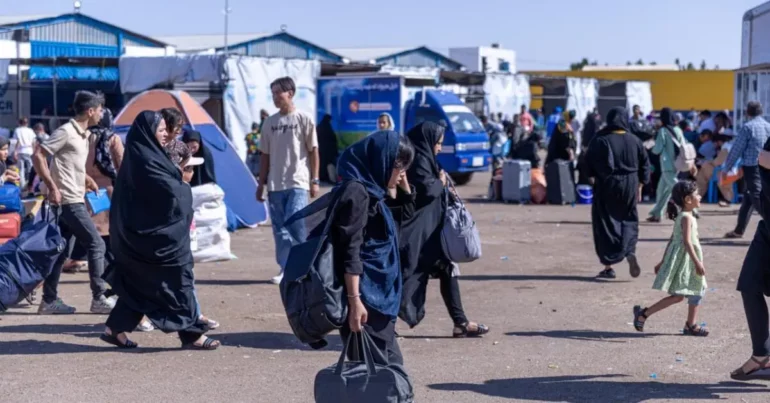

KABUL, AFGHANISTAN – UN Women says that most women, despite having strong motivation and the necessary skills, have become unemployed after returning to Afghanistan from Iran and Pakistan.
In a new report, UN Women states that only 17 percent of women have been able to find employment after returning to Afghanistan.
According to the report, 77 percent of female returnees from Iran and 64 percent of female returnees from Pakistan are unemployed in Afghanistan, while they had been working in those two countries.
The report notes that the remaining job opportunities for women are limited to informal, irregular, and low-income work, and that structural barriers have led to widespread unemployment or pushed women into low-paid and unstable home-based jobs.
According to the report, the average monthly income of returned women is estimated at around 1,100 Afghanis (equivalent to 17 US dollars), and 57 percent of them earn less than they did during migration, while only eight percent have experienced an increase in income.
The report further states that households headed by women are particularly vulnerable to declining income, debt, and food insecurity.
UN Women said that the income of these households is usually lower than those headed by men and often decreases over time or remains stagnant.
The report also highlights that nearly 40 percent of returning women reported having skills that they cannot use in Afghanistan.
The organization added that these women possess skills in technical, educational, or digital fields; however, they are unable to find employment due to a structural mismatch between their skills and the limited, informal labor market, which is affected by restrictions imposed by the Taliban on women’s participation.
According to the report, the most significant barrier preventing these women from using their skills is access to productive resources.
It also states that 77 percent of women do not have any tools to generate income, and only nine percent have access to the necessary equipment for their activities.
The report adds that job opportunities for women are more available in Kabul compared to other provinces, and the most accessible opportunities are in home-based production and handicrafts.
Over the past three years, the deportation of Afghan migrants from Iran and Pakistan and their return to Afghanistan has significantly increased, with a large proportion of returnees being women who had been living with their families in those countries.
However, upon returning to Afghanistan, these women face widespread restrictions imposed by the Taliban, including bans on education and employment, as well as limitations on their movement, all of which significantly affect their lives.
UN experts, international rights groups, and activists have described the Taliban’s systematic oppression of women as “gender apartheid,” an institutionalized system that subjugates women solely because of their gender. Despite international pressure, including from Muslim-majority countries and global organizations, the Taliban have refused to reverse the restrictions, leaving millions uncertain about their future.
The UN and rights groups emphasize that Afghanistan’s development and prosperity are closely tied to women’s participation in education, work, and public life. Restricting these opportunities not only violates basic human rights but also hampers economic growth, innovation, and the country’s ability to recover from decades of conflict.
These ongoing restrictions not only undermine the basic human rights of women and girls but also pose a significant threat to the overall public health system in Afghanistan, increasing the risk of preventable illnesses, maternal mortality, and long-term health crises across the country.
These findings highlight a growing humanitarian and economic concern, as the lack of employment opportunities and structural barriers not only limit women’s independence but also deepen poverty and inequality, particularly for female-headed households, making urgent support and policy intervention essential.

