

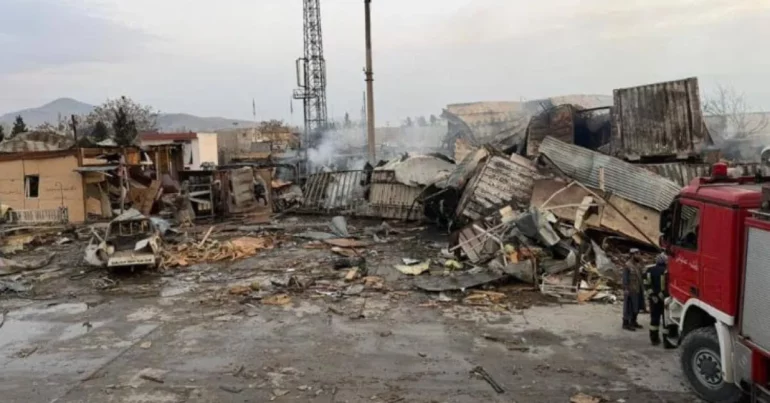

KABUL, AFGHANISTAN – Hamdullah Fitrat, the deputy spokesperson of the Taliban, says that from February 22 to April 4, at least 761 civilians have been killed in Pakistan’s attacks on Afghanistan.
He stated in a post on X this morning (Sunday, April 5) that during this period, 626 other civilians were injured in Pakistan’s attacks.
The deputy spokesperson of the Taliban also said that Pakistan has bombed the provinces of Kabul, Kandahar, Nangarhar, Paktia, Paktika, Khost, Kunar, Nuristan, and Laghman during this time.
He added that as a result of these attacks, 27,407 people have been displaced and 1,140 homes have been destroyed.
According to the statistics published by the deputy spokesperson of the Taliban, Pakistan’s attacks have also destroyed 256 shops, 34 mosques, 13 schools, 42 vehicles, 13 religious schools, and three clinics, and 661 heads of livestock have been killed.
So far, independent sources have not confirmed these statistics.
The war between the Taliban and Pakistan has been ongoing for about one and a half months.
In recent days, the two sides held talks in Ürümqi mediated by China, but it is still unclear what the results of these talks were.
In addition, three days ago, Pakistani media reported that a joint peace jirga was planned in Peshawar, bringing together political leaders, tribal elders, religious scholars, civil society members, business representatives, and media figures to help ease tensions between the two sides. The jirga aimed to promote mutual respect, build trust, and support serious negotiations for lasting peace, with a joint declaration expected to be submitted to the governments of both countries.
Pakistan and the Taliban, once allies, have clashed repeatedly along the border in recent months after Islamabad accused the Taliban of sheltering members of the Pakistani Taliban (TTP) responsible for dozens of deadly attacks inside Pakistan. UN figures indicate at least 289 civilians were killed or injured in Pakistani airstrikes across several provinces since late February, before the Kabul strike.
The latest wave of fighting, which began in late February, lasted more than three weeks and caused hundreds of casualties, including civilians. UN figures indicate at least 289 civilians were killed or injured in Pakistani airstrikes across several provinces during that period.
On Monday (March 16), a Pakistani airstrike hit a drug rehabilitation center in Kabul, killing at least 143 people according to the UN. The Taliban says 400 were killed and 250 were injured. UN agencies and human rights groups have called for an independent and impartial investigation.
The escalation marks one of the most serious spikes in tensions between the two sides in recent months. The Taliban authorities have accused Pakistan of violating Afghan sovereignty, while Islamabad has previously said its operations target militant groups it claims operate from Afghan territory.
The continuation of these attacks and the resulting civilian casualties underscore the fragile security situation along the Afghanistan-Pakistan border and highlight the urgent need for sustained diplomatic efforts and regional cooperation to prevent further humanitarian suffering.
Aid agencies have warned that the latest instability is compounding an already severe humanitarian crisis in Afghanistan, where millions face acute hunger and one-third of the population requires urgent food assistance this year. Further displacement risks worsening malnutrition rates, particularly among children.

