

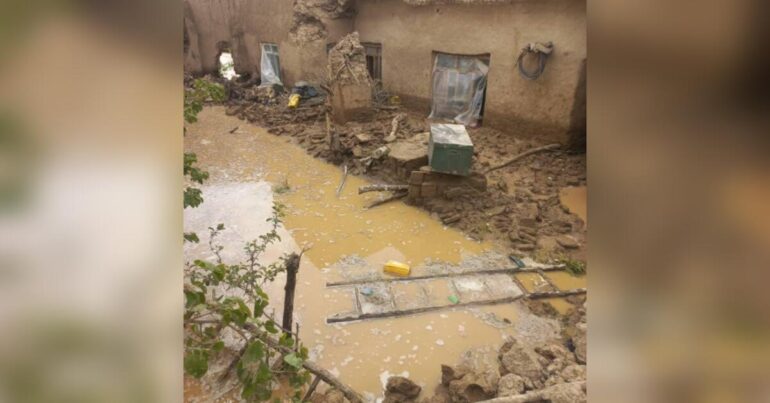

KABUL AFGHANISTAN – The death toll from weeks of heavy rain, snowfall, flooding, and landslides in Afghanistan has risen to 214, with 14 additional fatalities recorded in the past 24 hours, the Taliban-run disaster management authority said on Thursday.
Mohammad Yousuf Hammad, spokesperson for the National Disaster Management Authority, said the number of injured has increased to 300, while 11 people remain missing across the country as search and rescue efforts continue in affected areas.
Hammad said 1,481 homes have been completely destroyed and 5,921 others partially damaged, adding that many families have been displaced as residential areas were hit by flash floods and landslides.
Flooding has also caused widespread damage to farmland, roads, irrigation canals and transport routes, disrupting access in several rural and mountainous regions, according to the authority.
Afghanistan has been experiencing heavy rainfall and, in some areas, snowfall in recent weeks following years of drought conditions, triggering sudden floods, storms and landslides in parts of the country.
Earlier, the Taliban had put the death toll at 190 with about 250 injured. The United Nations estimates that more than 70,000 people have been affected nationwide, with many communities still cut off due to damaged infrastructure.
Humanitarian agencies warn that continued displacement, combined with the destruction of homes and farmland, is likely to keep emergency needs high in the coming weeks, especially in remote and hard-to-reach areas where access remains limited.
Afghanistan remains highly vulnerable to natural disasters, including seasonal flooding, drought and earthquakes, due to fragile infrastructure, environmental degradation and limited disaster response capacity.
The country is also facing one of the world’s most severe humanitarian crises. According to UN estimates, nearly 22 million people require assistance, while more than 17 million face acute food insecurity, with women and children among the most affected groups.

