

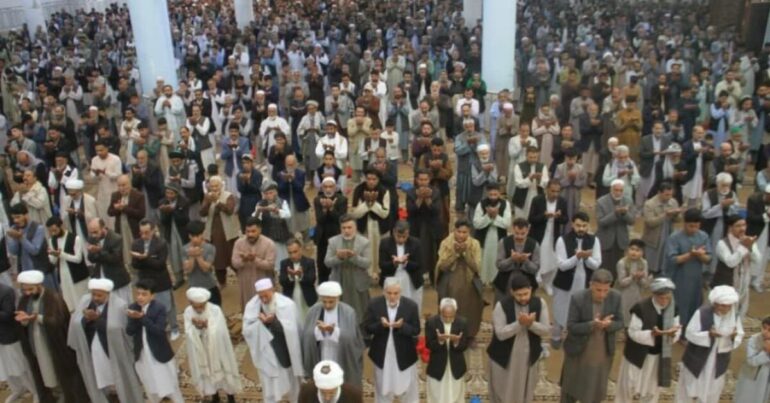

KABUL, AFGHANISTAN – Local sources have told KabulNow that the Taliban prevented Shia (a branch of Islam that follows the leadership of the Prophet Muhammad’s family, particularly Imam Ali) Muslims in Afghanistan from holding Eid al-Fitr prayers in Kabul and several other provinces, following a dispute over the official date of the holiday.
According to the sources, the Taliban did not allow Shia communities to perform Eid prayers on Saturday (March 21) and the previous day. The group had earlier declared Thursday as Eid al-Fitr, while many Shia Muslims observed the holiday on Friday and Saturday based on their own religious calculations.
Sources further reported that on Thursday, Taliban authorities in multiple provinces forced some Shia Muslims to break their fast and celebrate Eid in accordance with the group’s announcement. Individuals who refused to comply were reportedly detained.
A credible source in Kabul told KabulNow that prior to Eid, the Taliban’s Ministry for the Propagation of Virtue and Prevention of Vice held a meeting with members of the “Shia Ulema Council of Afghanistan” and the “High Commission of Shias.” During the meeting, Taliban officials reportedly told them that they must either celebrate Eid and perform prayers according to the Taliban’s declaration or refrain from holding Eid prayers altogether.
According to the same source, representatives of the Shia councils reportedly gave a “commitment” that if they did not observe Eid on the same day as the Taliban, they would not hold Eid prayers. As a result of this agreement and the dispute over the date of Eid, Eid prayers were not held in Shia mosques in Kabul and other provinces this year.
Forced Breaking of Fast
Sources also confirmed that on Thursday, Taliban forces in the provinces of Daikundi and Herat compelled some Shia Muslims to break their fast in line with the group’s Eid announcement.
A source in Daikundi stated that in the district center of Kiti, Taliban authorities forced local religious scholars to end their fast and perform Eid prayers. One cleric who refused to comply with the Taliban’s order was reportedly arrested and remains in detention.
In Herat province, sources reported that in the Jebrael township, Taliban members forced several Shia individuals to break their fast. A witness said that at one intersection, Taliban fighters forcibly made some Shia youths eat bread and drink water.
Prior to Eid, the Taliban in Herat had also detained several Shia religious scholars due to disagreements over the announcement of Eid.
This is not the first time such incidents have occurred. In previous years, the Taliban have similarly forced Shia communities in different provinces to follow their official Eid declaration and break their fast accordingly.
Since returning to power in 2021, the Taliban have faced widespread accusations of discrimination against non-Pashtun ethnic groups and religious minorities, alongside restrictions on civil liberties, media operations, and public dissent.

