

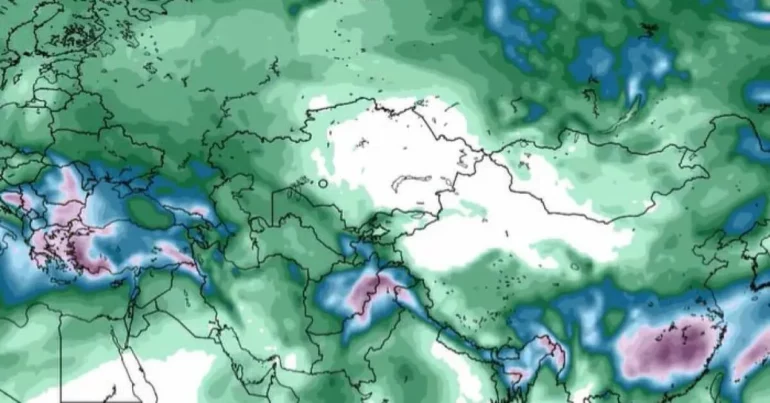

KABUL, AFGHANISTAN – The Food and Agriculture Organization of the United Nations (FAO) has forecast widespread rainfall across Afghanistan between March 30 and April 5.
The FAO stated that the heaviest rainfall will be concentrated in parts of the central, eastern, and southeastern provinces, increasing the likelihood of flash floods.
The organization added that continuous rainfall in recent weeks has significantly improved soil moisture conditions in most regions of Afghanistan.
The FAO further noted that the rainfall has also enhanced conditions for rainfed agriculture and has positively contributed to the growth and development of agricultural crops.
However, recent rainfall has also caused damages and casualties in various provinces of Afghanistan.
According to statistics from the Taliban’s National Disaster Management Authority, at least 17 people have died and 26 others have been injured due to rainfall across the country in the past two days.
Such weather patterns highlight the dual impact of seasonal rains in Afghanistan, where they are crucial for agriculture and food security, yet also pose serious risks to vulnerable communities due to flooding, weak infrastructure, and limited disaster preparedness.
FAO has previously reported that Afghanistan’s current rainy season began drier and warmer than usual. Earlier forecasts by the agency indicated a high probability of below-average precipitation and above-average temperatures across much of the country during early winter.
Afghanistan has experienced several consecutive years of reduced rainfall and severe drought, largely driven by climate change. While some areas have seen snowfall and rainfall this winter, overall precipitation levels are still considered below the long-term average.
This latest drought compounds a pattern of recurring water crises in Afghanistan. According to a report by ACAPS, the country has endured eight major droughts since 1969, including catastrophic events in 2018 and 2021 that affected over 11 million people. Ongoing groundwater depletion is threatening millions more.
Climate change is a significant driver of these worsening conditions. Temperatures in Afghanistan have risen by nearly 1.8 °C since 1950, leading to reduced snowfall in the Himalayas and diminished river flows. With precipitation trending lower, seasonal droughts are both more frequent and more severe.

