

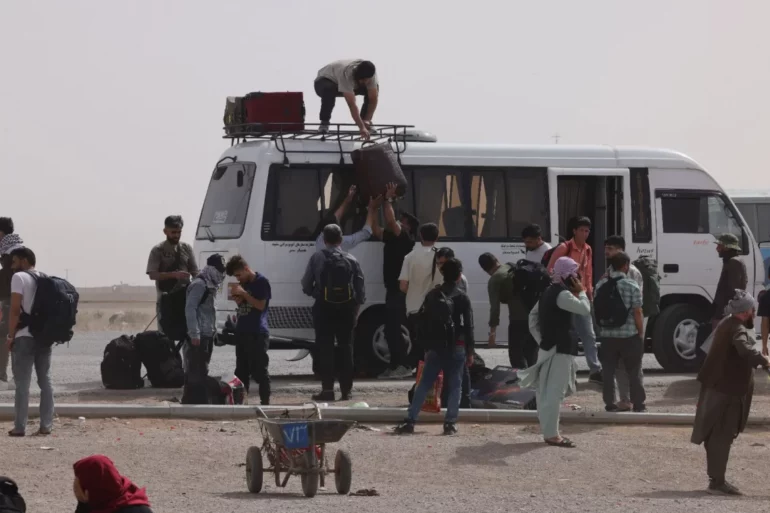

KABUL, AFGHANISTAN – More than 900 Afghan families returned from Pakistan and Iran in a single day on Thursday, according to Taliban-controlled media, amid ongoing deportations from the two neighboring countries.
Taliban-run Bakhtar News Agency reported that 843 families arrived from Pakistan, with 779 crossing through the Torkham border in Nangarhar province and 64 through Spin Boldak in Kandahar province. An additional 64 families returned from Iran, including 45 via Pul-e Abrisham in Nimroz province and 18 through Islam Qala in Herat province.
A day earlier, on Wednesday, more than 4,300 Afghan refugees returned from Pakistan and Iran, according to the Taliban figure, indicating an increase in daily returns, particularly from Pakistan.
Pakistan and Iran have long hosted millions of Afghan refugees due to decades of conflict, instability, and economic challenges in Afghanistan. The flow intensified after the Taliban regained power in August 2021, as many former officials, activists, journalists, and women fled potential reprisals and restrictions.
In recent years, however, both countries have tightened migration policies and stepped up enforcement measures, detaining and deporting undocumented Afghans in large numbers.
The United Nations estimates that since October 2023, about 5.4 million Afghans have returned from Pakistan and Iran, either voluntarily or through deportation. Of those, more than 2.8 million returned in 2025 alone.
The UN has said only a small proportion of returnees are able to find employment upon arrival in Afghanistan, raising concerns about their ability to meet basic needs.
Large-scale returns come as Afghanistan faces a deep humanitarian crisis under Taliban rule. The UN says nearly 22 million people, almost half the population, require humanitarian assistance this year, while close to four million children are suffering from acute malnutrition.
Women and girls continue to face restrictions on education and employment, limiting access to income and social services for many families.
Human rights groups and international aid agencies have repeatedly urged Pakistan and Iran to halt forced returns, warning that many returnees, particularly women, journalists, activists and former officials, face security risks and possible retaliation from the Taliban after crossing back into Afghanistan.

