

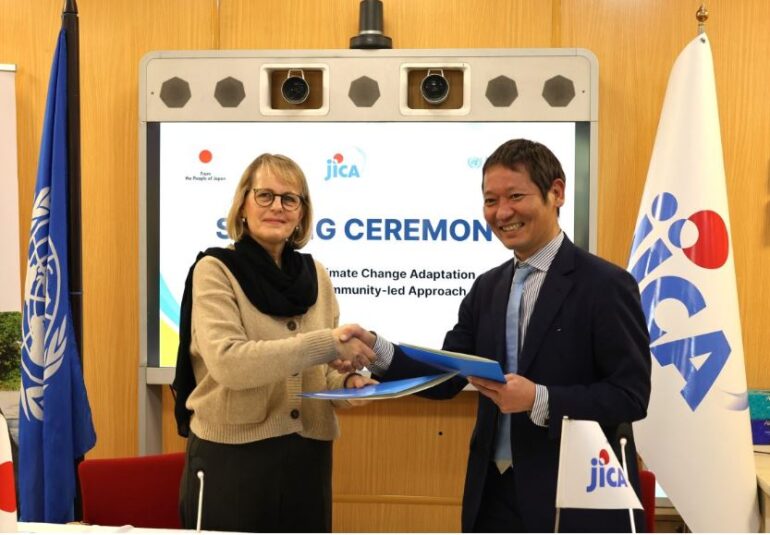

KABUL, AFGHANISTAN – Japan’s aid agency JICA and the UN Office for Project Services (UNOPS) have signed a grant agreement worth 1,474 million Japanese Yen, or about $10 million, to strengthen climate resilience and disaster preparedness across Afghanistan.
In a statement on Monday, the Japan International Cooperation Agency said that the agreement was signed on February 8 between its chief representative in Afghanistan, Tosaka Sota, and UNOPS country director Katy Ann Webley.
According to the statement, the two-year project will focus on community-based approaches, including training volunteers and developing local facilities to help communities respond more effectively to climate-related emergencies.
UNOPS will implement the project in coordination with local communities and relevant partners, focusing on preparedness activities such as early response mechanisms, emergency training, and infrastructure support at the community level, JICA said.
Afghanistan is among the countries most vulnerable to natural hazards, including earthquakes, floods, droughts, and extreme weather events. Years of conflict, weak infrastructure, and widespread poverty have increased the vulnerability of communities to such disasters
The country has suffered multiple major earthquakes in recent years. A powerful tremor in the eastern region last year killed nearly 2,000 people and injured more than 4,000. More than 56,000 families were affected, with widespread damage to homes and farmland. The UN says many survivors continue to endure severe hardship due to limited access to shelter, food, and health services, especially during the winter months.
Aid agencies say climate-related emergencies are becoming more frequent and more severe, increasing the need for long term investment in disaster preparedness and local response systems.
The grant agreement comes as Afghanistan remains heavily dependent on humanitarian assistance following the Taliban’s return to power in 2021. Nearly half of the population requires aid, while international funding for humanitarian operations has declined in recent years.

