


KABUL, AFGHANISTAN – The Food and Agriculture Organization of the United Nations (FAO) says dry conditions are expected to prevail across Afghanistan, despite limited precipitation recorded during the current winter season.
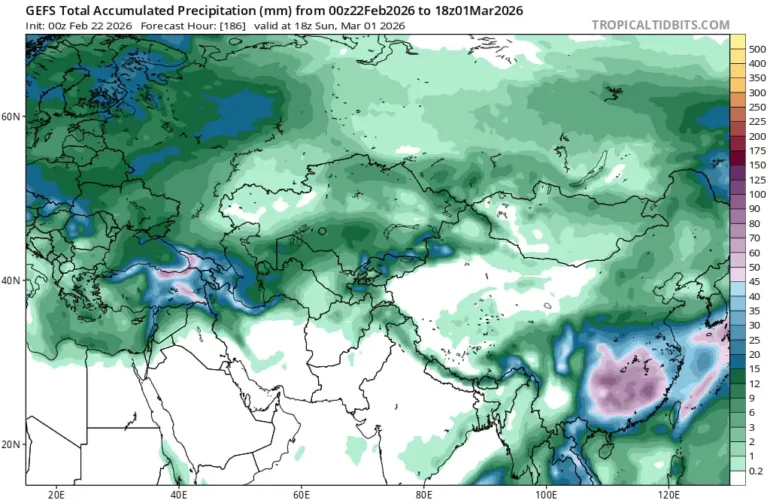
In an update issued on Monday (23 February), FAO said only light rainfall is forecast in parts of the north and north-east, while precipitation in most regions of the country is projected to remain below average.
According to the agency, warmer-than-normal temperatures — ranging between 0.25 and 4 degrees Celsius above the seasonal norm — are likely to accelerate snowmelt and reduce snowpack reserves critical for late spring irrigation.
FAO warned that minimum temperatures in higher elevations of the north-east, east and central highlands may still fall below freezing, maintaining the risk of localized frost.
The agency added that persistent dryness is increasing the risk of early-season moisture stress in the northern rainfed agricultural belt, raising concerns about crop performance and rural livelihoods.
FAO said it will continue monitoring precipitation patterns to assess evolving conditions in rainfed agriculture and the potential impact on rural communities.
Afghanistan has endured several consecutive years of drought. Although snowfall and rainfall have been recorded this winter, FAO indicated that current levels appear insufficient to bring an end to prolonged dry conditions.
The agency noted that precipitation in northern provinces and the central highlands has remained below average, leaving those areas comparatively drier. By contrast, parts of western and southern Afghanistan have received near-average to locally above-average rainfall.
However, FAO cautioned that accelerated snowmelt due to elevated temperatures could further diminish snow reserves and limit soil moisture replenishment later in the season.
FAO has previously reported that Afghanistan’s current rainy season began drier and warmer than usual. Earlier forecasts by the agency indicated a high probability of below-average precipitation and above-average temperatures across much of the country during early winter.

