

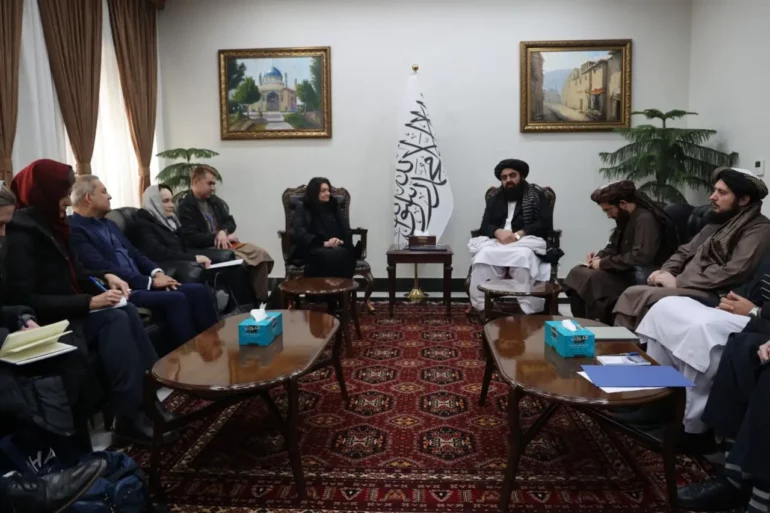

KABUL, AFGHANISTAN – The United Nations has renewed its call on the Taliban to lift bans on women’s education, employment and participation in public life, following a visit to Afghanistan by a senior UN official.
In a statement released on Sunday (January 25), the UN Assistance Mission in Afghanistan (UNAMA) said Rosemary DiCarlo, the UN Under-Secretary-General for Political and Peacebuilding Affairs, had concluded a three-day visit aimed at following up on the Doha Process and engaging with Afghanistan’s de facto authorities.
According to UNAMA, Ms. DiCarlo met with Taliban officials, Kabul-based diplomats, Afghan women, civil society representatives, and Afghan women working for the United Nations.
During her meetings with Taliban officials, Ms. DiCarlo expressed deep concern over restrictions imposed on women, including bans on female Afghan UN staff, and called for the immediate lifting of limitations on women’s education, employment and presence in public life.
In meetings with Afghan women and civil society representatives, Ms DiCarlo said she discussed the country’s human rights situation.
“I discussed the human rights situation in the country, including restrictions on women and girls, and the need for continued talks with the de facto authorities and the international community via the Doha Process,” she wrote on X.
UNAMA said she also encouraged the Taliban to engage actively in the Doha Process and to fulfil Afghanistan’s international obligations as a step towards reintegration into the global community.
Ms. DiCarlo confirmed that she held talks with Acting Foreign Minister Amir Khan Muttaqi.
“During the 3-day trip I had a productive discussion with the de facto Minister of Foreign Affairs, Amir Khan Muttaqi, on the Doha Process and opportunities & challenges related to Afghanistan’s reintegration into the international community,” she said.
The UN official also stressed the importance of allowing humanitarian aid to flow freely into Afghanistan and called for Taliban cooperation to ensure uninterrupted assistance.
She met with Afghan women working for the United Nations and expressed solidarity with them.
“Afghan personnel working for the United Nations play a critical role in Afghanistan’s development,” she wrote, adding that Afghan women “must be able to return to their offices to deliver for the people of Afghanistan.”
Meanwhile, Iran’s embassy in Kabul said Ms. DiCarlo also held talks with Alireza Bigdeli, Iran’s ambassador to Afghanistan. In a post on X, the embassy said the meeting focused on UNAMA’s activities in Afghanistan and Iran’s “constructive cooperation” in this area, without providing further details.
Taliban authorities have acknowledged Ms. DiCarlo’s meetings with senior officials, including Acting Interior Minister Sirajuddin Haqqani. Taliban statements said discussions mainly focused on the Doha Process, counter-narcotics efforts, support for the private sector and humanitarian assistance. They did not mention whether women’s rights or restrictions on female UN staff were discussed.
Since returning to power in August 2021, the Taliban have imposed sweeping restrictions on women, including banning girls from secondary and higher education and preventing women from working in most sectors. In mid-2023, Afghan women working for the United Nations were also barred from reporting to UN offices.
Ms. DiCarlo said her visit was part of a broader UN effort to pursue “principled and pragmatic engagement” with Afghanistan for the benefit of its people.

