

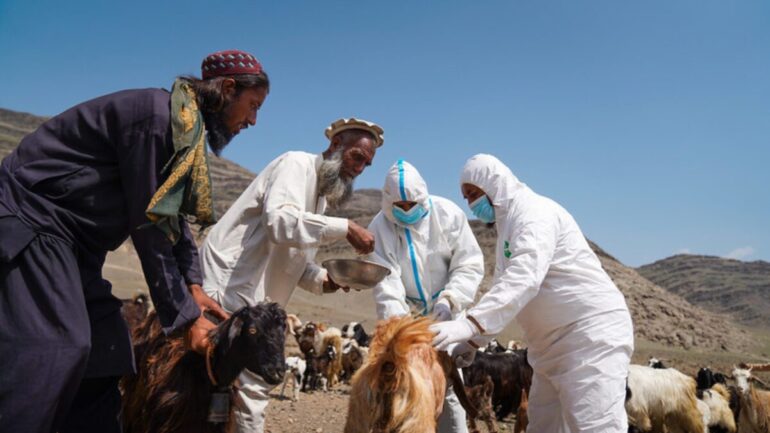

KABUL, AFGHANISTAN – The United Nations Food and Agriculture Organization (FAO) and the Asian Development Bank (ADB) have launched a $100 million initiative to strengthen food security and restore agricultural livelihoods for more than one million vulnerable people in Afghanistan.
The two-year project, announced on Thursday, will support over 151,000 households, equivalent to about 1.057 million people, including returnees from Pakistan and Iran, host communities, and families impacted by recent earthquakes and floods.
The initiative aims to help rural households restore their livelihoods, protect livestock, and rebuild agricultural production systems disrupted by years of conflict, economic decline, and natural disasters.
According to FAO, large-scale agricultural assistance and life-saving food aid previously helped reduce acute food insecurity across the country, but conditions have begun to worsen again.
The organization projected that in 2026, about 17.4 million people in Afghanistan will face acute food insecurity, including 4.7 million people in IPC Phase 4, classified as emergency levels of hunger marked by severe food consumption gaps and high rates of acute malnutrition.
“As millions of people in Afghanistan face growing pressures and risk falling into deeper levels of acute food insecurity and malnutrition, there is an urgent need for sustainable investment that goes beyond emergency responses and strengthens long-term resilience,” FAO said in the statement.
FAO said the new project will focus on supporting crop and livestock production, restoring irrigation systems, and improving access to agricultural inputs to stabilize food supplies in rural areas.
Since 2022, the Asian Development Bank has provided about $265 million in grant assistance through FAO to strengthen agricultural production and address acute food insecurity nationwide, the statement said.
Through this partnership, FAO said it has reached an estimated 5.6 million vulnerable people, supporting more than 841,000 households in restoring crop and livestock production, improving food security and nutrition, and stabilizing food supply chains during a prolonged humanitarian crisis.
Afghanistan continues to face one of the world’s largest humanitarian emergencies, with persistent poverty, climate shocks, and economic constraints undermining household food security and agricultural livelihoods.

