

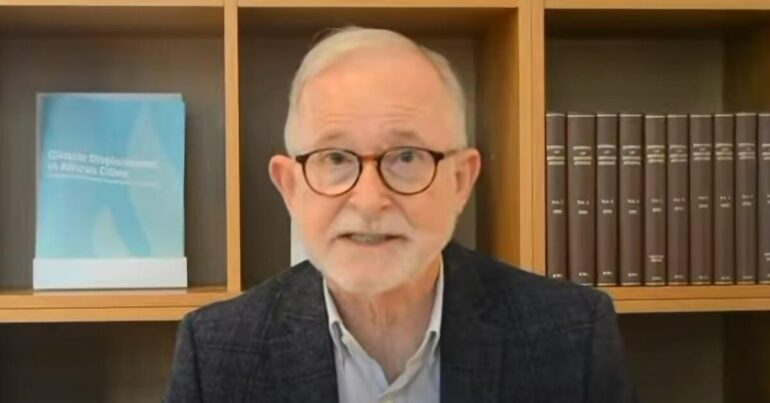

KABUL, AFGHANISTAN – Richard Bennett, the UN Special Rapporteur on human rights in Afghanistan, has called for greater international support for Afghan journalists and media outlets, both inside the country and in exile, saying they are the primary defenders and documenters of what is happening under Taliban rule.
Speaking online at the 3rd Annual Global Summit on Afghanistan’s Press Freedom held in Berlin on Friday, Bennett said Afghanistan is facing a long-term “suppression of memory, identity, and future possibility” due to the Taliban’s tightening grip on the country’s media
“In this environment, Afghanistan’s hybrid media has become indispensable,” Bennett said. “Media organizations publishing and broadcasting from abroad are now among the primary defenders and documenters of what is happening in the country.”
Bennett highlighted that Afghan media, particularly those operating in exile, continue to report on crimes and human rights violations despite severe challenges, including funding cuts and Taliban-imposed restrictions.
The UN expert said that journalists in Afghanistan continue to face censorship, intimidation, arbitrary arrests, and increasing restrictions, especially women journalists who confront additional constraints due to greater restrictions imposed on their appearance, freedom of movement, and work.
He called on the international community to support Afghanistan’s exiled media as well as the journalists who continue to work inside the country.
“I urge donors and other international partners to provide long-term, stable, and meaningful political and financial support to Afghanistan’s independent and hybrid media, because without their voices the world’s understanding of the country will be seriously diminished,” Bennett said. “I also urge support of Afghan journalists inside the country reporting courageously under severe restrictions and sometimes under threat, especially women journalists,” he added.
At the event, Nasir Ahmad Andisha, Afghanistan’s permanent representative to the UN in Geneva, echoed Bennett’s call.
“Press freedom in Afghanistan is not just under attack — it is the frontline of a broader assault on human rights,” Andisha said, noting that more than 300 journalists have been killed, tortured, or disappeared since the Taliban returned to power in 2021. “Afghanistan’s exiled media provide 70% of independent coverage of the country’s situation. These outlets are architects of accountability, not merely reporters of despair.”
Organized by the Afghanistan Media Support Organization (AMSO), the summit brought together journalists, media representatives, and activists to discuss the shrinking space for independent journalism under Taliban rule. Participants emphasized that media inside and outside Afghanistan continue to report courageously, often at great personal risk, but face severe funding shortages that threaten their survival.
Freedom of the press and expression were among the many achievements of the former Western-backed government in Afghanistan. Since the Taliban’s return to power in August 2021, those gains have been steadily eroded. The group has issued over 20 directives limiting press freedom and access to information. Dozens of journalists and media workers have been arrested, tortured, or killed in recent years.
The crackdown has led to the closure of over half of Afghanistan’s media outlets, including state-run television stations. Independent media operating in exile face severe financial constraints and limited access to information, as funding cuts and Taliban restrictions continue to hinder their work. Furthermore, many journalists who fled to neighboring countries to escape Taliban reprisals remain at risk of detention or deportation, as these countries increasingly tighten measures against Afghan refugees.

