

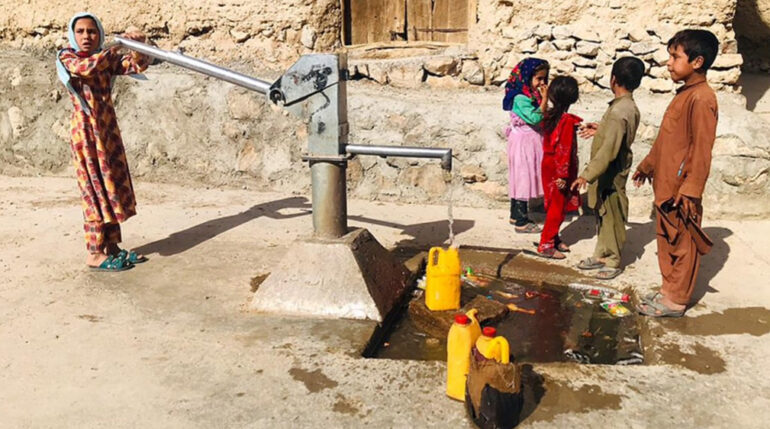

KABUL, AFGHANISTAN – More than 90% of residents in Shindand and surrounding districts in Herat province lack access to safe drinking water, local Taliban authorities said, with prolonged drought and falling groundwater forcing thousands to leave their homes.
Bismillah Ataei, head of the Shindand water supply department, said the crisis affects Shindand, Zawal, Zirkooh, Koh-Zor, and Pashtkooh districts, which together have a population of over one million. Nearly 900,000 residents do not have access to clean water.
Families often travel long distances to fetch water, while in some areas wells have completely dried up. The shortage has forced many to relocate to market centres and district hubs where water is more accessible.
Shindand and its neighbouring districts are among the largest and most populated areas of Herat province. Local officials say the combination of poor infrastructure, rapid population growth, and climate-related stress has intensified the water crisis.
Afghanistan has experienced consecutive years of severe drought, compounded by rising temperatures, shrinking aquifers, and inadequate water infrastructure. UN agencies have repeatedly warned that the country is at high risk of a worsening humanitarian emergency due to water scarcity.
Earlier this year, UN-Habitat warned that Kabul was approaching a “severe emergency,” with millions of residents facing declining groundwater and limited access to safe drinking water. Afghanistan ranks sixth globally on the Climate Risk Index, highlighting its vulnerability to climate-related disasters. Experts say urgent international support and sustainable water management are essential to prevent the crisis from worsening.

