

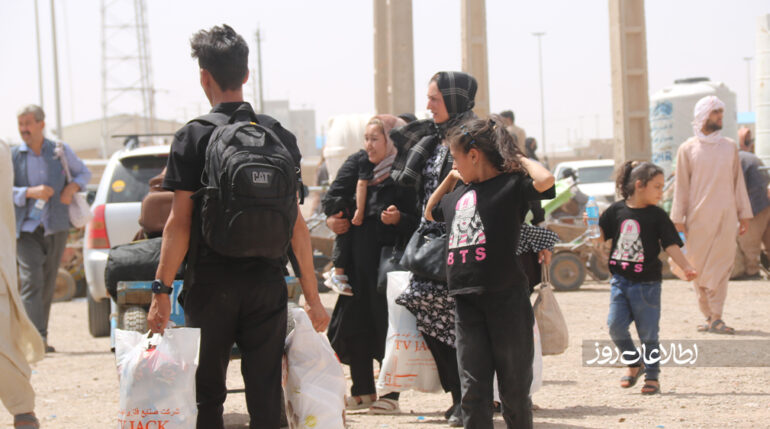

KABUL – Iran has deported nearly 1.8 million Afghan migrants over the past three months, according to Taliban authorities, amid tightening border policies across the region and growing pressure on undocumented migrants to leave.
Speaking at a press conference on Wednesday (July 30) Abdul Rahman Rashid, Deputy Minister for Technical Affairs at the Taliban-controlled Ministry of Refugees and Repatriation, also confirmed the forced return of 184,459 Afghans from Pakistan and 5,134 from Turkey over the past year.
Iran continues to expel large numbers of Afghans on a near-daily basis. While Iranian authorities claim over one million undocumented Afghans have been removed so far this year, estimates vary widely, with some officials placing the total number of undocumented Afghans in Iran at over four million. Others suggest the figure is closer to two million.
In Pakistan, where at least three million Afghans reside, the future remains uncertain for over one million whose Proof of Registration (PoR) cards have expired. The Pakistani government has yet to announce whether these documents will be renewed, leaving hundreds of thousands vulnerable to deportation.
The Taliban claim they have registered returnees and addressed their basic needs. Officials also say 38 residential townships have been established across 29 provinces for returnees, as per an order from the group’s supreme leader. However, humanitarian organizations and local sources report a starkly different reality.
With international aid dwindling, Afghanistan faces an acute economic and humanitarian emergency. According to the UN Office for the Coordination of Humanitarian Affairs (OCHA), more than 23 million people—over half the population—require urgent assistance. The World Food Programme (WFP) reports that nearly 15 million Afghans face high levels of food insecurity.
Returnees face bleak conditions upon arrival. The Taliban’s capacity to absorb the influx has been widely criticized, with many returnees finding no access to shelter, livelihoods, or essential services. Unemployment is at record levels, and the economy remains paralyzed under Taliban rule and ongoing international sanctions.
UN and rights groups have also documented increasing repression under Taliban control, including restrictions on women’s freedom, arbitrary arrests, forced evictions, and persecution of ethnic minorities. These conditions continue to drive thousands of Afghans to flee the country, even as others are being forcibly sent back.
The UN and aid agencies have repeatedly warned that large-scale deportations could exacerbate Afghanistan’s already fragile humanitarian situation, urging neighboring countries to respect international law and protect vulnerable populations.
However, in the absence of coordinated international support and amid the Taliban’s governance failures, the return of millions may further strain the country’s social and economic fabric.

