

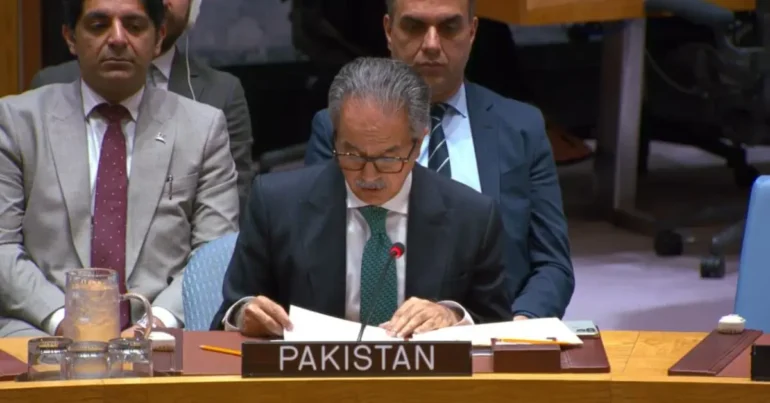

KABUL, AFGHANISTAN – Asim Iftikhar Ahmad, Pakistan’s representative to the United Nations, says that elements within the Taliban are actively collaborating with several terrorist groups in Afghanistan and providing them with safe havens.
Speaking at a United Nations Security Council meeting on Afghanistan on Monday (June 15), Pakistan’s representative said that “Tehrik-i-Taliban Pakistan (TTP), the Balochistan Liberation Army and its Majeed Brigade, ISIS-Khorasan, Al-Qaeda, and the East Turkestan Islamic Movement are operating with impunity inside Afghanistan.”
He added that “many of these groups are responsible for cross-border terrorist attacks targeting civilians, military personnel, critical infrastructure, and public places in Pakistan.”
Pakistan’s representative described the terrorist threat emanating from Afghanistan as the country’s most serious challenge and said that the alarming growth of this threat directly affects Afghanistan’s neighbors, particularly Pakistan.
Militant violence has surged across Pakistan in recent years, with the northwestern Khyber Pakhtunkhwa and southwestern Balochistan provinces — both bordering Afghanistan — seeing the highest number of attacks. The TTP and Baloch separatist groups have stepped up attacks on security forces and state installations.
Islamabad accuses the Afghan Taliban authorities of harbouring TTP fighters and allowing them to use Afghan territory to plan and launch cross-border attacks. The Taliban rejects these allegations, maintaining that Pakistan’s security challenges are an internal issue and that no such groups operate from Afghan soil.
On the surface, the Taliban have sought to distance themselves from involvement in the TTP’s conflict with the Pakistani government. Last year, they organized a large gathering of religious scholars in Kabul and issued a religious decree stating that participating in “jihad” outside Afghanistan is “not obligatory.”
Nevertheless, some Taliban-affiliated officials and preachers have continued to argue that “fighting on Pakistani soil” is permissible.
Tensions between Islamabad and Kabul have escalated sharply since late 2025, marked by dozens of border clashes, Pakistani airstrikes inside Afghanistan — including targets in Kabul and Kandahar — and retaliatory actions. The exchanges have resulted in hundreds of casualties on both sides, including civilians.
The issue of militant groups operating in and around Afghanistan has remained a major source of tension between Afghanistan and Pakistan. International observers and regional stakeholders have repeatedly expressed concern that unresolved security challenges and cross-border militancy continue to pose risks to regional stability and security, underscoring the need for greater cooperation and dialogue among all parties involved.

