

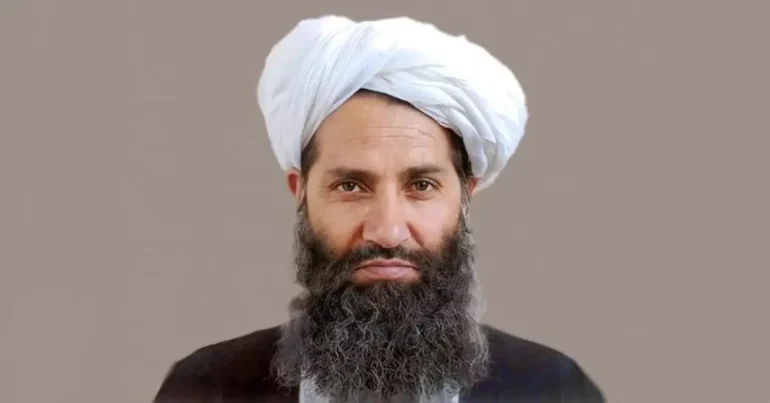

KABUL, AFGHANISTAN – Hibatullah Akhundzada, the leader of the Taliban, in a meeting of the group’s Council of Ministers, emphasized religious and ideological education for the people and said that strengthening the Islamic system depends on teaching religion.
He instructed Taliban officials to teach religion to the public, engage in discussions about religious matters, and remain committed to piety. He also urged them to maintain humility in their conduct, raise religious awareness among people, and protect society from immoral and incorrect ideas.
According to a statement published today (Saturday, June 13) by Hamdullah Fitrat, deputy spokesperson of the Taliban, the Taliban leader in the Kandahar meeting repeatedly highlighted the importance of religious education and ideological guidance for the population.
He further stated that people should be made aware of religion, Sharia, and the Islamic system, while officials themselves must remain disciplined and careful in their conduct.
Mullah Hibatullah also stressed that Taliban officials should promote what he described as correct religious belief among the population. He said religious knowledge should be spread across the country and revived so that it can strengthen the Islamic system, and that efforts should be made to ensure religious teachings reach all areas.
The Taliban leader also instructed officials to carefully review his directives and make serious efforts to implement and communicate them to the public.
He added that officials should demonstrate Islamic values and religion through their own behavior and actions.
The Taliban call their administration an Islamic system. The group claims to follow Sharia law, but its restrictions do not exist in any other Islamic society or country. Experts accuse the Taliban of exploiting religion for political purposes.
Hibatullah Akhundzada is the supreme leader of the Taliban and holds the highest authority in the group’s decision-making structure, particularly on religious, political, and governance matters.
Since the Taliban returned to power in 2021, his leadership has been central in shaping the direction of the government, especially through strict interpretations of Islamic law and centralized control over policy decisions from Kandahar.
In general, the Taliban government has implemented a range of policies based on its interpretation of Sharia, which has significantly affected different aspects of public life in Afghanistan. These include restrictions on education and employment for women and girls, limitations on media freedom, and strict social regulations.
In particular, women have been barred from secondary and higher education in most cases and face severe restrictions on work and public participation, which has drawn widespread domestic and international criticism.
Internationally, the Taliban administration remains largely unrecognized by most countries, and its policies have been a point of concern for the global community, especially human rights organizations and the United Nations.
Many governments have called for the reversal of restrictions on women’s rights and broader political inclusivity. At the same time, the Taliban continues to emphasize that its system is based on Islamic principles and seeks internal legitimacy through religious governance rather than external approval.

