

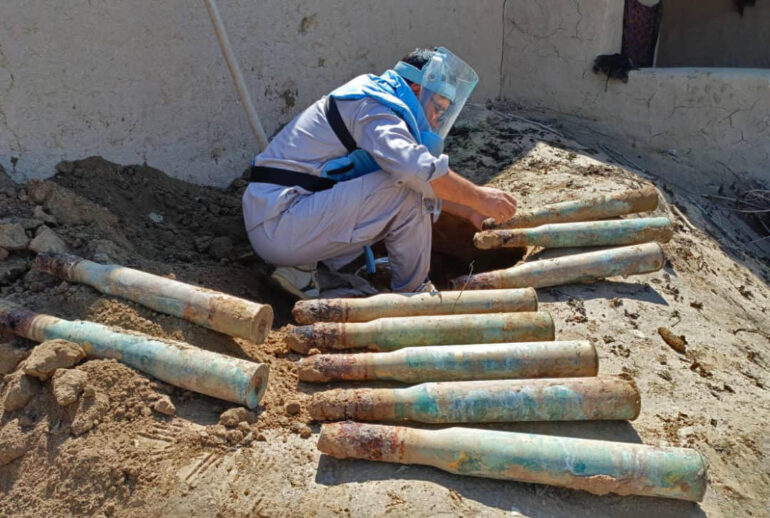

KABUL, AFGHANISTAN – A United Nations-supported demining team has safely neutralized and destroyed 25 unexploded artillery shells discovered at a residential property in Afghanistan’s northern Baghlan province, the UN Development Programme (UNDP) said on Tuesday.
In a report, UNDP said that the shells were uncovered during reconstruction work on the property in Baghlan-e-Markazi district of Baghlan Province. According to the report, the ordnance had been buried beneath the soil and were likely remnants from the Soviet occupation of Afghanistan in the 1980s.
The agency warned that a single detonation could have leveled the house and endangered surrounding areas. “As a result of this operation, 8 workers and 16 members of one family were directly saved from the risk of death,” UNDP said.
In a similar incident in the same province, UNDP deminers found and safely destroyed stacks of dangerous unexploded ordnance stored among rusting scrap metal at a junk shop in the local market of Nahrin district.
The agency said the incidents highlight the continued threat posed by explosive remnants of war across Afghanistan, particularly when people are rebuilding homes, cultivating land, or carrying out excavation and infrastructure work.
The country is one of the most heavily contaminated by landmines and unexploded ordnance after more than four decades of conflict, including the Soviet invasion, civil wars and the Taliban insurgency. UN data indicates that approximately 3.3 million Afghans live within one kilometer of contaminated zones, facing daily risks.
Children are especially vulnerable, often mistaking unexploded devices for toys or encountering them while playing, collecting firewood or tending animals. Save the Children reported that nearly one Afghan child is killed or injured by explosive ordnance every day on average. Between January 2025 and January 2026, the organization documented 338 child casualties, representing nearly 70% of all victims during that period.
Meanwhile, international funding for demining and risk-awareness programs has declined in recent years, forcing humanitarian agencies to scale back or suspend some operations. Aid groups and UN officials have repeatedly urged donors to increase support for clearance efforts and community education, warning that without sustained funding, unexploded ordnance will continue to claim civilian lives for years to come.

