

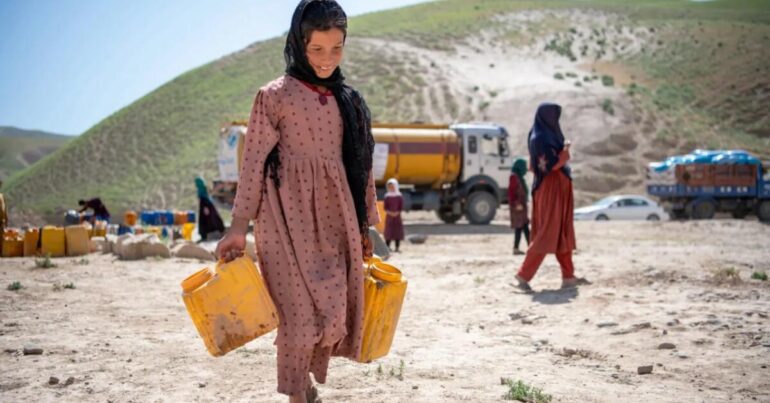

KABUL, AFGHANISTAN – Afghanistan is among the countries most exposed to the impacts of climate change despite contributing almost nothing to global emissions, the UN Children’s Fund (UNICEF) said, describing the situation as a “silent emergency.”
In a report released Tuesday, UNICEF said more than half of Afghanistan’s water sources in drought-prone provinces have dried up, severely limiting access to safe drinking water for millions.
“A staggering eight out of ten Afghans now drink contaminated water, and sanitation systems in urban areas are collapsing under the strain of disasters and environmental degradation,” said Dr. Tajudeen Oyewale, UNICEF’s representative in Afghanistan.
Oyewale said the recent earthquakes in the country’s north and east have worsened the crisis, leading to a rise in waterborne diseases.
Despite facing one of the world’s most severe climate emergencies, Afghanistan has no representation at the ongoing UN Climate Change Conference (COP30) in Belém, Brazil. The Taliban, who control the country, were not invited.
“As world leaders take the stage in Brazil, I ask them to remember the countries not present in the negotiation halls — the children walking for water with empty containers and the parents burying children whose deaths could have been prevented,” Oyewale said.
Afghanistan contributes just 0.08% to global greenhouse gas emissions but ranks among the most climate-vulnerable nations. Years of drought, environmental degradation, and frequent natural disasters — including floods, earthquakes, and landslides — have left millions struggling to survive.
According to the International Organization for Migration (IOM), nearly nine million Afghans were affected by climate-related hazards in the past year, and more than half a million were displaced by disasters.
The humanitarian crisis has only deepened since the Taliban’s return to power in 2021, with over half of the population now dependent on aid. But as international funding declines, relief agencies are struggling to deliver life-saving assistance to those most in need.

