
KABUL, AFGHANISTAN – The United Nations Population Fund (UNFPA) in Afghanistan has called for people with disabilities to be included in decisions affecting their lives, emphasizing the need to listen to their experiences and priorities.
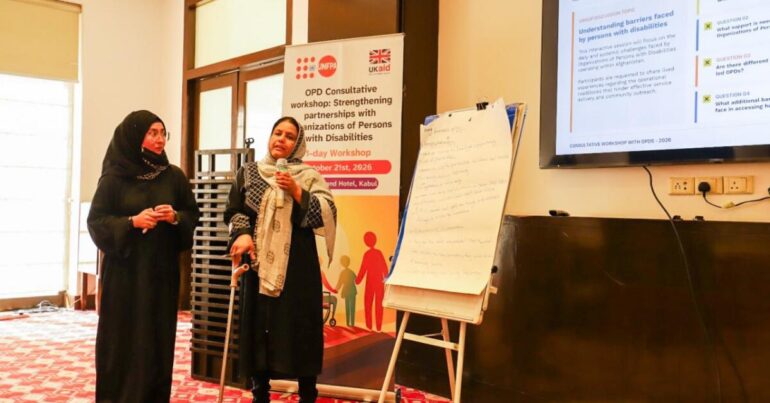
In a post on X on Friday, UNFPA said it had held a workshop in partnership with the British Foreign Office, bringing together organizations of people with disabilities to hear their perspectives and identify their priorities.
“Nothing about us without us,” the agency quoted participants as saying, underscoring the importance of their direct involvement in decisions that affect them.
Decades of conflict, particularly the Taliban insurgency over the past two decades, poverty and limited healthcare services have left a significant portion of Afghanistan’s population living with disabilities. A 2024 United Nations figure estimated that around 1.5 million people in the country have “significant disabilities.”
Human Rights Watch cited a 2019 Asia Foundation survey in a February 2024 report, stating that about four in five adults and one in five children in Afghanistan had some form of physical, sensory, intellectual or psychosocial disability.
The problem is compounded by the lingering threat of explosive remnants of war. Each year hundreds of people suffer life-changing injuries from landmines and unexploded ordnance. Afghanistan remains one of the world’s most heavily contaminated countries, and children are especially vulnerable, often encountering the devices in areas where they live or play.
In 2019 the former Afghan government approved legislation requiring at least 3% of posts in government agencies and the civil service to be filled by qualified people with disabilities. However, after the Taliban returned to power in August 2021, the legislation and the Independent Administrative Reform and Civil Service Commission, which was responsible for implementing it, were effectively abolished.