

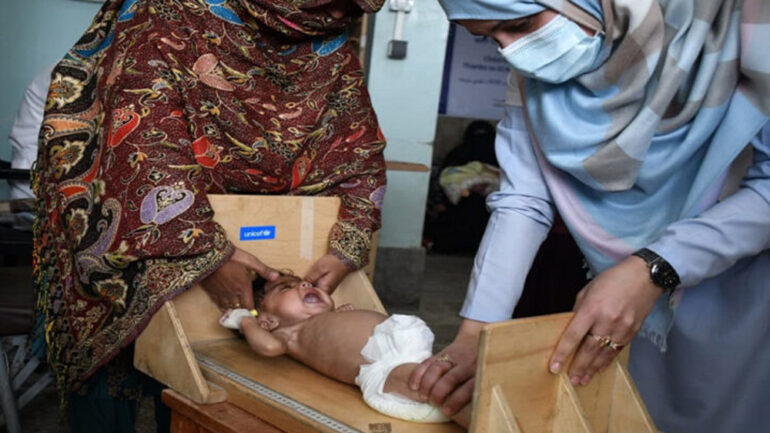

KABUL, AFGHANISTAN – Millions of children under the age of five in Afghanistan are at heightened risk of malnutrition, UNICEF warned in a new report released on Sunday, calling for urgent action to prevent the country’s nutrition crisis from worsening.
In a statement published on X, UNICEF Afghanistan said that an estimated 3.7 million children under five are at increased risk of malnutrition and stressed the need for immediate efforts to protect children’s diets and ensure vulnerable families receive timely assistance.
“Urgent action is needed to protect young children’s diets and reach families before the crisis deepens,” the agency said.
Reacting to the report, UNICEF Representative in Afghanistan Dr. Tajudeen Oyewale described the findings as “a stark warning,” saying that millions of young children are facing an elevated risk of malnutrition. He called for immediate international support to protect children’s nutrition and prevent further deterioration of the situation.
The UNICEF warning also aligns with recent findings from Médecins Sans Frontières (MSF). Earlier this month, the medical aid organization reported a sharp increase in cases of severe acute malnutrition among children in southern Afghanistan, saying admissions to its nutrition treatment centers rose by more than 30 percent between January and April compared with the average for the same period over the previous three years.
MSF said most of the affected children were under the age of one and warned that many were arriving at health facilities in critical condition with preventable medical complications, underscoring the growing strain on Afghanistan’s healthcare and nutrition systems.
Afghanistan continues to face one of the world’s most severe humanitarian crises, driven by widespread poverty, prolonged economic hardship, climate-related shocks, and decades of conflict. Humanitarian organizations have repeatedly warned that these factors have left millions of families struggling to access sufficient and nutritious food, with children among the most vulnerable.
According to UN agencies, around half of Afghanistan’s population requires humanitarian assistance. Aid organizations have consistently warned that funding shortages are limiting life-saving nutrition, healthcare, and food assistance programmes, increasing the risk of acute malnutrition among children.
Humanitarian agencies continue to urge donors to sustain support, warning that delayed funding could have long-term consequences for the health and development of millions of Afghan children.

