

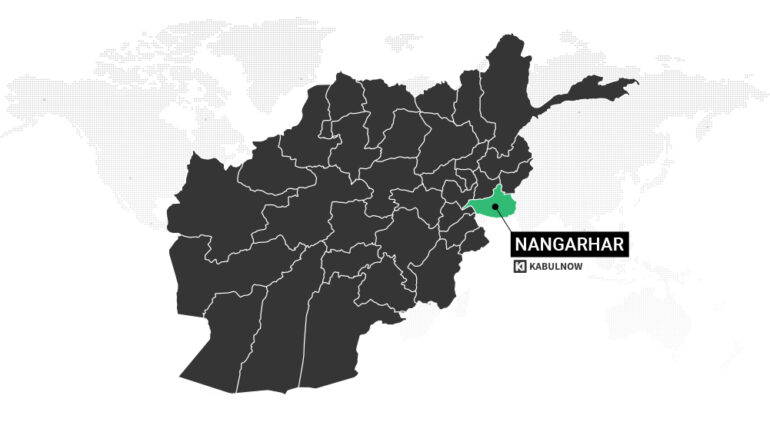

KABUL, AFGHANISTAN – Local sources in Nangarhar say that a female doctor was killed by unidentified armed individuals in Surkh Rod district of the Nangarhar province in eastern Afghanistan.
A source, who requested anonymity, told KabulNow that the doctor was killed inside her home in the Sheikh Mesri area of Surkh Rod district on Sunday night (June 21).
The source said that the doctor was named Gulalai and was originally from Pachir Aw Agam district.
The source added that Gulalai was employed at a government hospital in Surkh Rod and lived with her father in Sheikh Mesri township.
According to the source, unidentified armed men forcibly entered their home at night, tied up her father, and killed Gulalai after subjecting her to severe torture.
In the attack, Gulalai’s father was also beaten, and one of his arms was broken.
About five months ago, Gulalai had released an audio message in which she complained that she had been harassed and threatened by certain Taliban members.
In the recording, she said that some local Taliban officials had made “illegitimate sexual demands” of her and had even “threatened her with death.”
The Taliban authorities in Nangarhar have not yet commented on Gulalai’s killing.
The case comes amid broader concerns about violence against women in Afghanistan. In a report submitted to the UN Security Council earlier this month, the UN Secretary-General said that UNAMA documented 21 cases of conflict-related sexual violence against women and girls in Afghanistan over the past year, including rape, gang rape, forced marriage, and other abuses allegedly involving Taliban officials.
The report also noted that women who challenge Taliban policies have faced arbitrary detention, torture, and ill-treatment, while funding cuts have reduced access to protection services, healthcare, and legal support for survivors of violence.
After the collapse of the Afghan government in 2021 and the Taliban’s return to power, the situation of women and girls has sharply deteriorated. They have been systematically excluded from secondary and higher education, restricted from many forms of employment, and subjected to severe limitations on their freedom of movement and participation in public life.
In many cases, women are unable to access basic services without a male guardian, and their visibility in society has been significantly reduced through institutionalized restrictions.
Many human rights organizations and UN experts describe these policies as a form of gender apartheid where laws and governance structures are used to enforce systematic segregation and discrimination against women and girls on the basis of gender alone.
This situation has not only deepened poverty and dependence but has also increased protection risks, including violence, forced marriage, and lack of access to humanitarian assistance. As a result, Afghan women continue to face one of the most severe and restrictive environments for women’s rights in the world today.

