

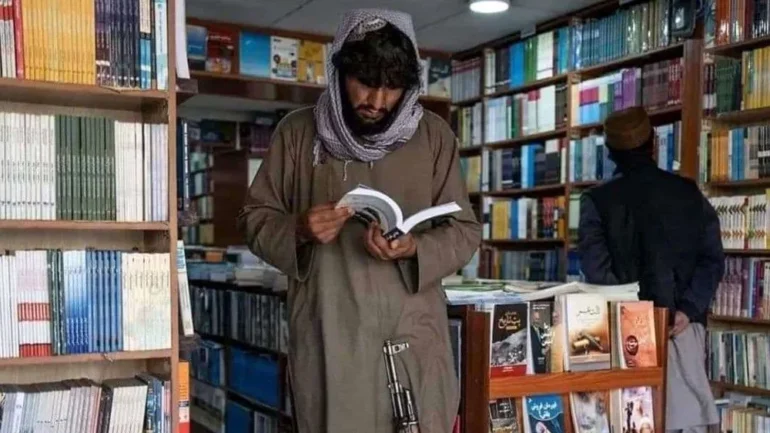

KABUL, AFGHANISTAN – The Taliban’s Ministry of Information and Culture says that its “Book Evaluation Commission” collected 929 books from private libraries across the country during the year 2025.
The ministry said in a statement today (Sunday, May 3) that these books were collected because they did not comply with “principles and standards.”
The Ministry of Information and Culture provided no further details about the books or the specific principles and standards under which they were deemed unacceptable.
According to an investigative report by the KabulNow newspaper published in early 2025, the Taliban have mainly been collecting books from libraries and banning their sale for ideological, religious, and ethnic reasons.
The report states that by the month of September 2025, the Taliban had banned the printing, reproduction, possession, and sale of at least 400 book titles. These included books critical of the group, books on religious reform and modern thinking, books on women’s rights, and even some well-known novels and international literary works.
It was also later reported that the Taliban collected Shiite religious books and books authored by women from certain bookstores.
This development highlights the shrinking space for freedom of expression under Taliban rule in Afghanistan. The removal and restriction of hundreds of books from private libraries, particularly those linked to critical thinking, women’s rights, religious reform, and diverse ideological perspectives, reflects a broader pattern of censorship that limits access to information.
Such measures not only affect writers, publishers, and readers, but also weaken intellectual diversity and academic freedom in the country.
The Afghanistan Journalists Center (AFJC) reports a sharp rise in violations of press freedom in Taliban-ruled Afghanistan, documenting at least 150 cases since May 2025. These include 127 threats against journalists and 20 arrests of media workers, most of them attributed to the Taliban.
The report also highlights the shutdown of at least 11 media outlets and the revocation of licenses of 10 media support organizations for not complying with Taliban directives. In addition, access to information has become more restricted, with many government departments banning video reporting and controlling interview content.
Women journalists have faced increasing limitations, including restrictions on broadcasting women’s voices and censorship during official press briefings.

