



KABUL, AFGHANISTAN – Afghanistan Women’s Rights Watch (AWRW), a women’s rights watchdog, documented at least 411 verified cases of severe human rights violations against women and girls in Afghanistan in 2025, highlighting widespread violence, exclusion, and surveillance under Taliban rule.
The findings were published in AWRW’s annual report, From Marginalization to Erasure, released on February 14 at an event in Kayseri, Turkey, organized with support from the Turkey-based ARSA Association and attended by academics, journalists, and civil society activists.
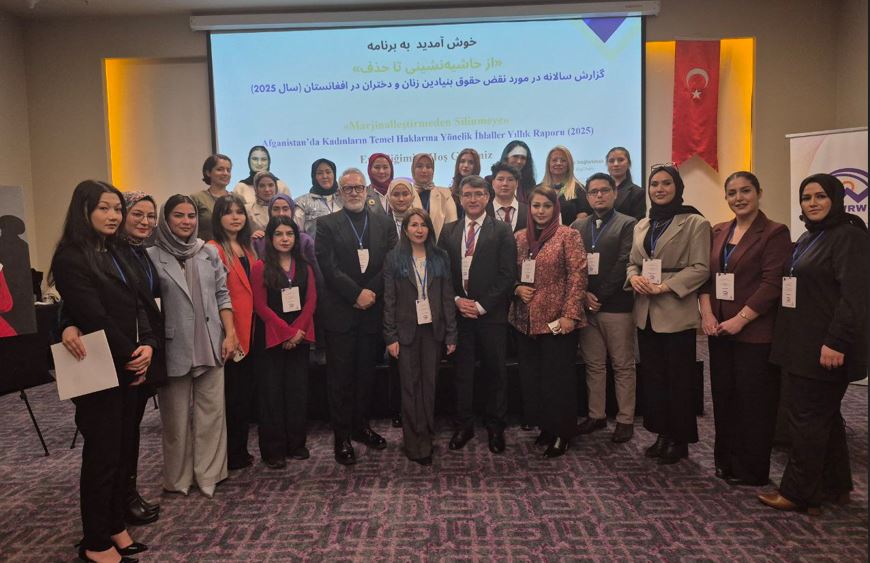
“This report is the result of a collective effort to document one of the most challenging periods of violations of women’s rights in Afghanistan,” said Dr. Zakira Hekmat, AWRW director. She noted that widespread restrictions, censorship, and security challenges had made the collection of independent data both high-risk and complex.
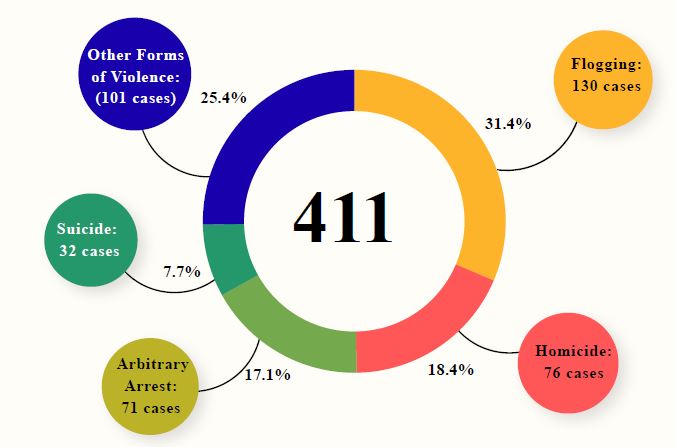
The report details a wide spectrum of abuses. Of the 411 verified cases, 296 involved direct violence by Taliban authorities, including 76 intentional killings, primarily linked to women resisting forced marriages or property confiscation. Other forms of abuse included 130 public floggings, 118 severe beatings, 72 arbitrary detentions and enforced disappearances, and three cases of sexual violence in intelligence detention facilities.
The group said each case was independently verified by at least two sources. All data were anonymized and stored outside Afghanistan to protect victims and informants from surveillance by the Taliban’s General Directorate of Intelligence.
The report found that more than 82% of victims were aged 18 to 34, and over 140 held higher education degrees. Analysts cited in the report described this as deliberate targeting of educated women capable of organizing, documenting abuses, or communicating with the outside world. “This is a form of gendered elite targeting,” the report stated, warning that the policy aims to erase women’s professional and institutional memory.
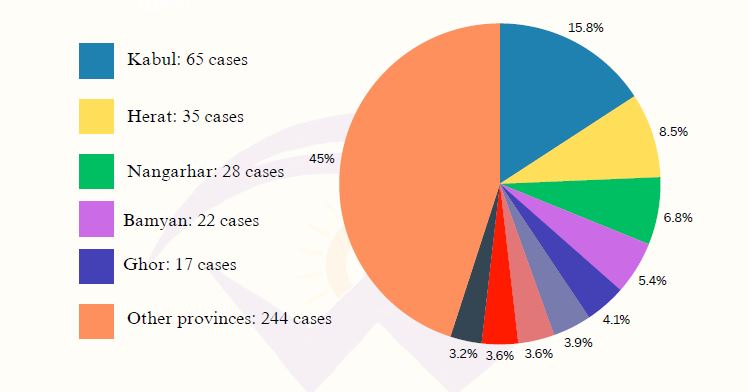
Geographically, violations were recorded across the country. Kabul recorded the highest number of arbitrary detentions, Nangarhar the highest number of killings, and Kandahar, the Taliban’s power center, showed fewer recorded cases, which analysts attributed to near-total information blackouts rather than lower levels of abuse.
The report also documented the indirect effects of Taliban restrictions, including a sharp decline in mental health among women. Thirty-two suicides were recorded in 2025, and 90% of surveyed women rated their mental health as “poor or very poor.”
Humanitarian crises further worsened the situation. According to the report, following a major earthquake in eastern Afghanistan that killed more than 2,200 people, strict enforcement of dress and male-guardian rules blocked or delayed about 70% of humanitarian aid, putting women at heightened risk. Additionally, the return of an estimated 1.8 million women from Iran and Pakistan, combined with annulled divorces granted under the previous government, forced thousands back into abusive situations or left them vulnerable to forced marriage.
The report said the dismantling of domestic protection mechanisms has left victims without access to justice. The Ministry of Women’s Affairs has been dissolved, all 27 women’s safe houses have been closed, and approximately 270 female judges have been dismissed.
AWRW called for international action, including investigations by the International Criminal Court, strengthening the UN Special Rapporteur’s mandate, and conditioning diplomatic engagement on verifiable improvements in women’s rights.
“In such circumstances, silence, inaction, or delayed engagement by the international community risks normalizing this situation and entrenching serious and systematic human rights violations,” the report said. It added that coordinated, sustained, and rights-based action grounded in international law constitutes not merely a moral responsibility but a legal obligation.
The report concluded that failure to act could entrench gender-based oppression and undermine international human rights standards, warning that without global intervention, the systematic marginalization and targeting of Afghan women may become normalized.

